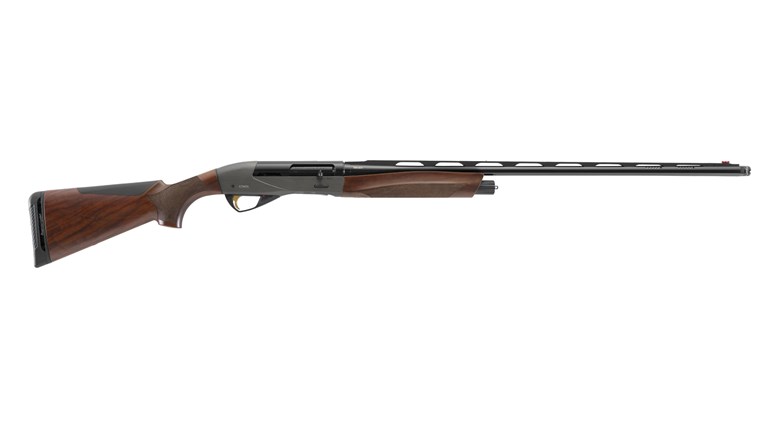
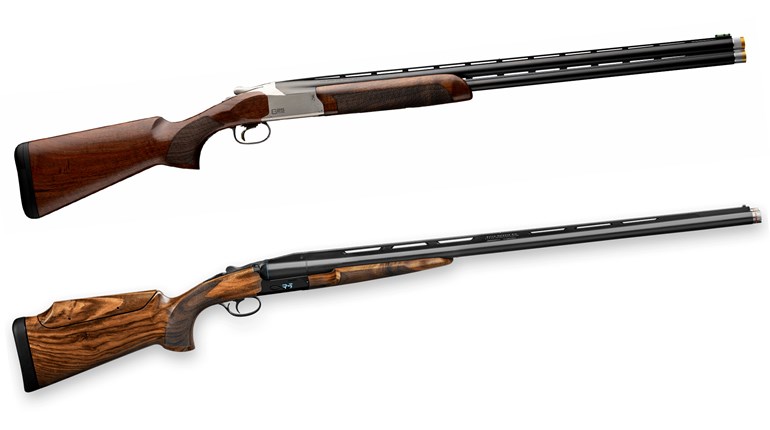
A shotgun that fits shoots where you look. This way when you bring the gun’s stock to your face you can pull the trigger without hesitation, confident that whatever you’re looking at will wind up in the center of a swarm of pellets. Also, a gun that fits is easier to handle and more comfortable to shoot.
So how do you know if your shotgun fits? Most people pick up a gun, throw it to their shoulder and squint down the rib. If the beads line up they announce, “It comes up nice.” At the other end of the spectrum a formal gun-fitting session includes a try-gun with a fully adjustable stock. You shoot at a steel pattern plate and clay targets while the fitter tweaks the stock’s dimensions.
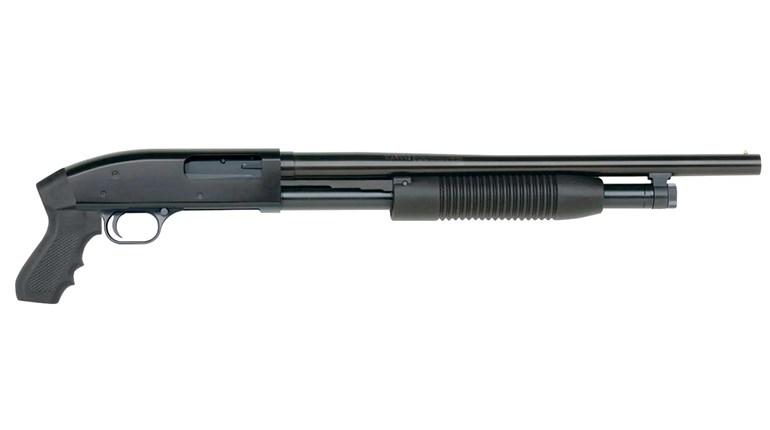
While a full-scale fitting is a worthwhile experience, you can fit yourself. An increasing number of guns—Browning, Benelli and Beretta semi-autos, as well as Mossberg pumps and semi-autos—come with shims and spacers that let you change the drop, cast and stock length. With other guns you’ll have to improvise your shotgun’s fit adjustments.
Check Your Fit
Gun fitters use a 3- or 4-foot square steel plate covered with paint or grease to show pellet strikes when they test a gun’s fit. If you don’t have a pattern plate, you can use a sheet or a plastic tablecloth. Hang it up, and make a 2-inch aiming mark in the center. Screw in a tight choke and shoot from 16 yards away. Start with an un-mounted gun and raise it smoothly to your cheek. Focus on the target and shoot the instant the gun touches your shoulder. Don’t correct your aim or look at the bead(s). Repeat this process until a hole appears in the target. If the hole is centered above or below the aiming point, you will have to alter the drop of the stock. If the center is left or right you will want to adjust the cast. Every inch off center at 16 yards requires a 1/16th-inch change in the stock dimensions.
Drop
Adjusting the drop of the stock is equivalent to correcting the elevation on a rifle sight. Drop is the distance from the top of the barrel or rib to the top edge of the stock, measured at the front of the comb and at the top of the butt, or “heel.”
To raise the comb you can use Dr. Scholl’s adhesive-backed moleskin and build up the comb until you find the right height. One way to easily increase drop and lower the point of impact is to lengthen the stock. While increasing the length of the stock doesn’t change the dimensions, it does put your cheek farther back on the sloping stock, effectively increasing drop.
With a pump or semi-auto you can temporarily increase drop by loosening the stock bolt and wedging a small shim between the head of the stock and the top of the back of the receiver, then tightening the bolt again. Use a very thin shim, as even a flat wood toothpick can change the drop of a gun half an inch.
For field shooting, some people want a gun that shoots slightly high, say, 60 percent of its pattern above the aiming point and 40 percent below. Others prefer a flat 50-50 point of impact that requires you to blot out the bird with the muzzle. A gunsmith can lower the comb by rasping the wood, or raise it either by building it up or adding an adjustable comb.
Cast
Cast is the windage adjustment on a shotgun. It’s a lateral bend in the stock designed to center your dominant eye over the rib. Shooters with wider, rounder faces or narrowly set eyes often need cast, while many thin-faced shooters can shoot uncast stocks (most American gunstocks have no cast, whereas many European guns do). Right-handed shooters need “cast off,” a bend to the right; lefties need “cast on.” If you want to adjust cast on a pump or a semi-auto shotgun use a toothpick shim. Loosen the bolt and wedge the shim lengthwise along the stock head opposite the direction you want to bend the stock. Gunsmiths can permanently cast stocks with hot oil or a heat lamp.
Length of Pull
Length of pull (LOP) is the distance between the front of the trigger and the center of the gun butt. To determine your LOP, mount the gun then measure the distance between your nose and the knuckle of your thumb. It should be about two finger-widths or 1-1½ inches. A stock should be short enough that you can mount the gun without snagging it on your vest, but long enough that you don’t have to pull it a long way back into your shoulder, which can pull the muzzle off target. A slip-on recoil pad or spacers can lengthen a stock; a thinner recoil pad can shorten it. If you have to cut it down, be sure not to alter the angle of the butt, known as the “pitch.”
Pitch and Toe Out
Pitch and toe out are often overlooked. Adjusting both dimensions can make a gun more comfortable to shoot. Pitch is the angle of the butt pad relative to the barrels. To distribute recoil over the largest possible area the butt should make full contact with the shoulder pocket rather than digging at the top or bottom or jumping up to slap your face. You can experiment with pitch by backing out the top or bottom screw of the recoil pad and using quarters as spacers to change the angle of the pad. More down pitch (spacers at the top) counteracts face slap; more up pitch (spacers at the bottom) can tame a gun that kicks downward.
Toe out angles the bottom of the butt plate outward and helps shooters who have problems canting (tilting) the gun. A stock with toe out is often more comfortable for women. You can experiment with the angle of the toe by removing the bottom screw of your recoil pad and twisting the pad outward.
Measuring Your Alterations
After you’ve made your adjustments, either take the gun and your original target to a gunsmith with your temporary alterations in place or measure the new dimensions. You’ll need a gun cradle (a cardboard box with notches cut in the ends works in a pinch), a metal yardstick and a ruler.
With the gun in the cradle, stand the straight edge on the rib so it extends back over the stock. Use the ruler to measure the distance from the bottom of the straight edge to the comb and heel (or to the mid-point of the stock if you built the comb up with moleskin). To measure cast, center the straight edge on the rib, then measure the distance from the centerline of the rib to the centerline of the recoil pad. To measure LOP go from the front center of the trigger to the middle of the back of the pad. Determine pitch by measuring from the center of the trigger to the top and bottom of the pad. The distance from the center of the pad at the bottom to the center of the butt is the toe out.