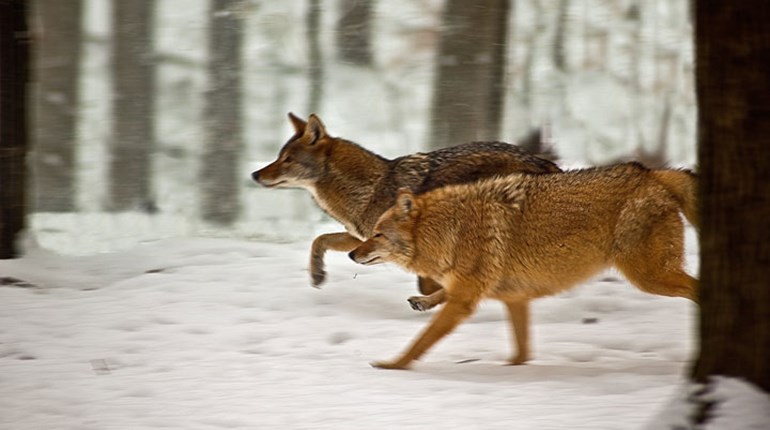
A bitter conflict in the coyote community is escalating. From mid-January to mid-March, depending on where you live, coyotes are locked in a territorial battle for the right to breed. Mating season mayhem is upon us.
Now, mating instincts affect every portion of the coyote’s being, which gives the savvy predator caller an added advantage. Coyotes become more aggressive and offensive, protective and defensive, territorial and hungry. Here’s why this is the time of year to be calling coyotes hard.
Female coyotes are monestrous, meaning that they only experience estrus once per year. Thus, male coyotes only produce sperm during the time females are receptive. The coyote estrus period only lasts about 10 days, and if the male tries to breed her before she is ready, she’ll threaten and reject him until the time is right. She’ll growl, bark, yip and even whimper, all the while bearing her razor-sharp teeth in an attempt to make her point to her suitor. Even though coyotes are monogamous, oftentimes the alpha male will get frustrated with the teasing and go on the prowl looking to mate with a receptive female either within or outside his pack. The males simply follow a basic male mating strategy to spread their genes. He’ll return to his mate when she’s ready.
This is why estrus whimpers, sometimes referred to as chirps or yips, work so well during the mating phase. Both males and females alike are on high alert. When a male hears that sound, he’s curious to see who’s trying to butt in on his breeding territory. If a female hears these sounds, she just might aggressively come to the call, her intent to run off any female attempting to mate with the pack’s alpha dog. Thus, adding a few growls, yips and a few barks in with the estrus whimpers on stand could provoke a response from the whole pack.
When the female is ready to breed, she will call the male back to her with the female invitation howl. It doesn’t take an Einstein-level IQ to understand why this sound is so effective to male coyotes young and old.
The “nesting period” is a primal instinct that all mothers of the animal kingdom experience in some form or another during pregnancy. A pregnant coyote will busily prepare a den site for the pups that arrive in just nine weeks. She will also protect that territory from all enemies foreign and domestic. And because both males and females share the responsibilities of raising their brood equally, males do their part, too. Thus, the challenge howl can be incredibly effective right now. It is, however, a call that should be used sparingly on stand, with great patience. And because breeding make coyotes hungry, it is also important to use prey distress sounds this time of year.