Is a 25-Yard Zero Dead-On at 100 Yards?

by
posted on June 10, 2011
** When you buy products through the links on our site, we may earn a commission that supports NRA's mission to protect, preserve and defend the Second Amendment. **
bs_2015_fs.jpg (4)

The Myth: A 25-yard zero puts you “dead-on” at 100 yards. I’ve listened to some pretty amazing ballistic theories over the years but this one is probably the most common. The theory is that, with common big game cartridges, a “zero” at 25 yards will correlate to a second “zero” at 100 yards.

The Ballistic Background: First we have to understand the concept of zero. Because a rifle’s sights are not inside the bore and a bullet’s flight path is subject to gravity, we must align our sight to intersect with the bullet’s path at a given distance. Generally, we consider the rifle’s “zero” to be the point at which the bullet’s path intersects the line of sight for the second time. In other words, if the bullet strikes the line of sight at 25 yards and then rises relative to the line of sight before falling and intersecting the line of sight again at 100 yards, we have a 100 yard zero.

Let’s look at a few common examples:

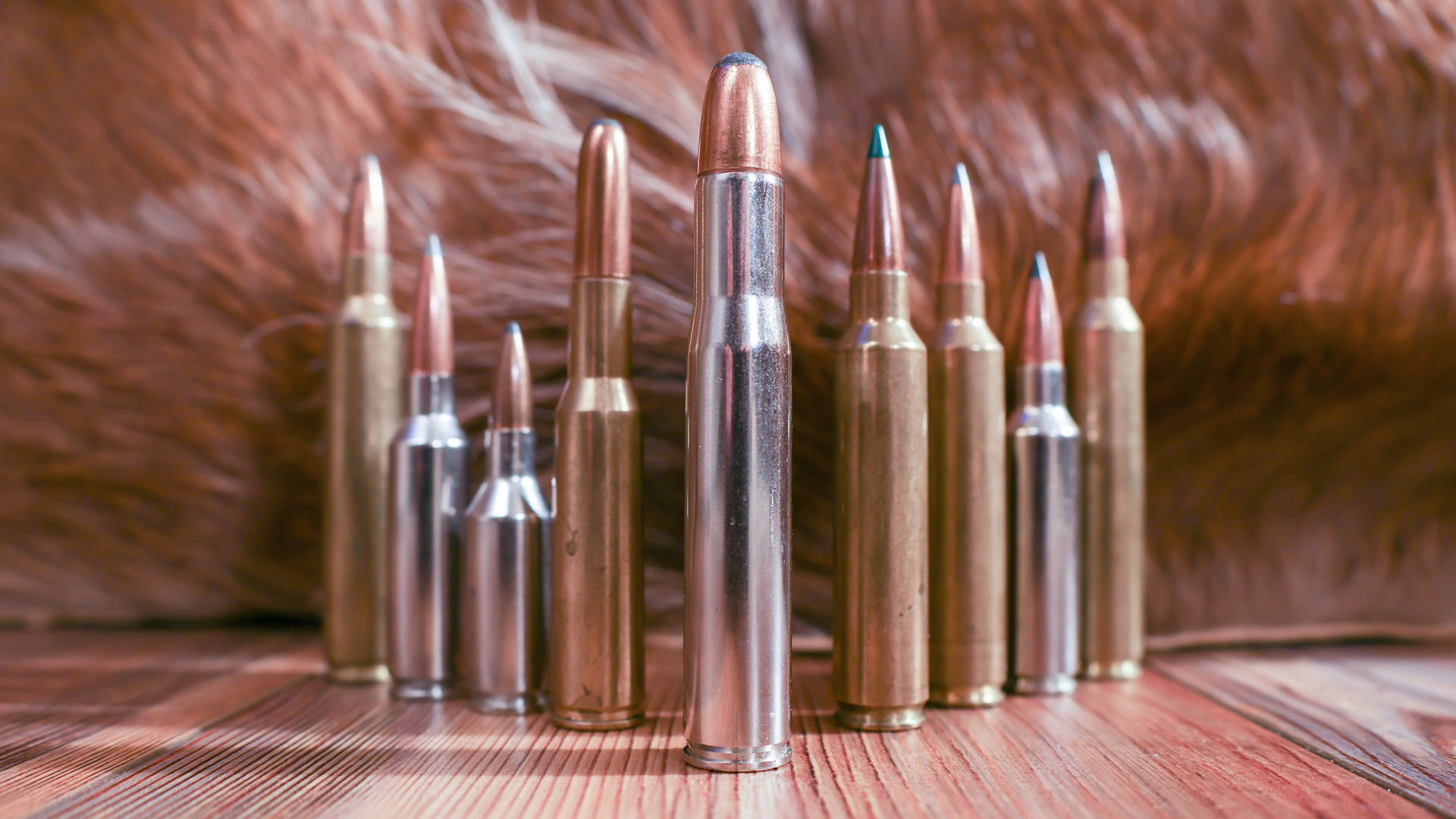
.30-06 Federal Premium 165gr. Nosler Partition 2830 fps (Factory)
25 yard zero=2.77 inches high at 100 yards

.270 WCF Winchester Silvertip 130gr. 3060 fps (Factory)
25 yard zero=3.0 inches high at 100 yards

.243 Winchester 100gr Hornady Interlock 2960 fps (Factory)
25 yard zero=2.9 inches high at 100 yards

Fact is,most common big game loads would be about 3 inches high at 100 yards. For hunting purposes it may be "close enough," but it's not "dead on" for most calibers.

The Conclusion: A 25-yard zero will put your bullet around 2.5 to 3 inches high at 100 yards depending on caliber, but it's not "dead on."

Latest

Ledeservice Awards More Than

More Than $6.6 Million in Tribal Wildlife Grants to Advance Conservation

The U.S. Fish and Wildlife Service (USFWS) is awarding more than $6.6 million to federally recognized Native American and Alaska Native tribes to benefit fish and wildlife resources and their habitats. This year’s funding will support 35 tribes for conservation projects across 15 states, benefiting a wide range of wildlife and habitat, including species of cultural or traditional importance to Indigenous communities.

Hardware Review: TriStar KR.22

TriStar is noted for shotguns, but Bryce Towsley recently received a test gun from them that’s much different. Check out his review on the TriStar KR.22.

New for 2026: Browning Trail Cameras' Security Tree Strap

Browning Trail Cameras has released a Security Tree Strap, a durable and dependable mounting solution to keep trail cameras in place in nearly any environment.

Proof Research Introduces PXT Rifle Barrel Technology

Proof Research has launched Proof Exponential Twist (PXT), an advancement in rifling that promises to improve durability, accuracy and shootability. Further, Proof has backed this new technology with extensive military testing and research. Engineered to meet the demands of modern high-pressure ammunition, PXT is billed as delivering longer barrel life, improved consistency and enhanced performance.  

Ammo Analysis: So You Like 'em Heavy?

Phil Massaro discusses what might make someone opt for a heavy-for-caliber choice when taking on game.

New for 2026: Steiner eDiscovery 10x42 Binoculars with Integrated Camera

Steiner Optics has introduced the eDiscovery 10x42 binoculars, combining clarity and durability with a fully integrated 4K camera.

Interests


Get the best of American Hunter delivered to your inbox.