The whoops and claps of the beaters and the barking of the dogs were getting closer to the edge of the open field, where I stood waiting for a wild boar to show. My hunting colleagues were about 150 yards to both my left and right, bedecked in orange and as eager as I was. A branch snapped, some leaves rustled in the thick forest, and all hell broke loose. The Polish farm fields were flooded with pigs—big ones, little ones and all sizes in between—and the rifles opened up. One boar—which looked more like a fur-covered Smart car than any other pig I’d seen before—broke out to my right; I swung the Heym SR21 through him and broke the trigger, sending a 230-grain Norma Eco Strike exactly where it needed to go. This was my first experience with the 9.3x62mm Mauser, and one I won’t soon forget.
Metric cartridges haven’t exactly been a huge hit in America, until the recent uprising of the 6.5mm cartridges. Yes, the 7mm Remington Magnum has a half-century long track record of success, but that’s the exception, and not necessarily the rule. I feel we’ve been missing out on a good many cartridges that would’ve served us all well, and I’d put the 9.3x62mm Mauser well toward the top of that list.
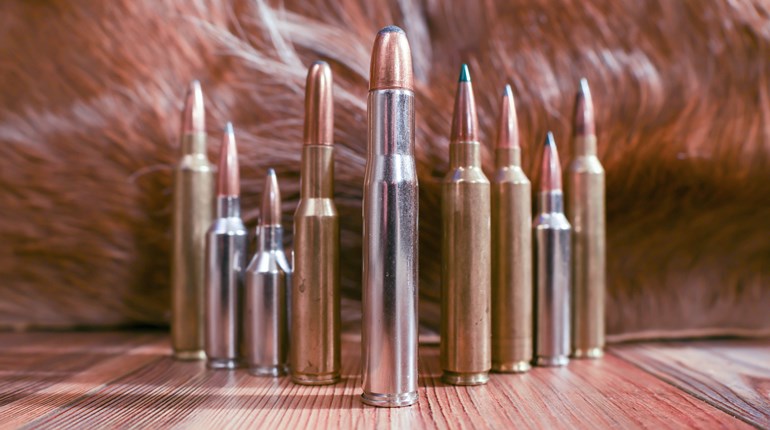
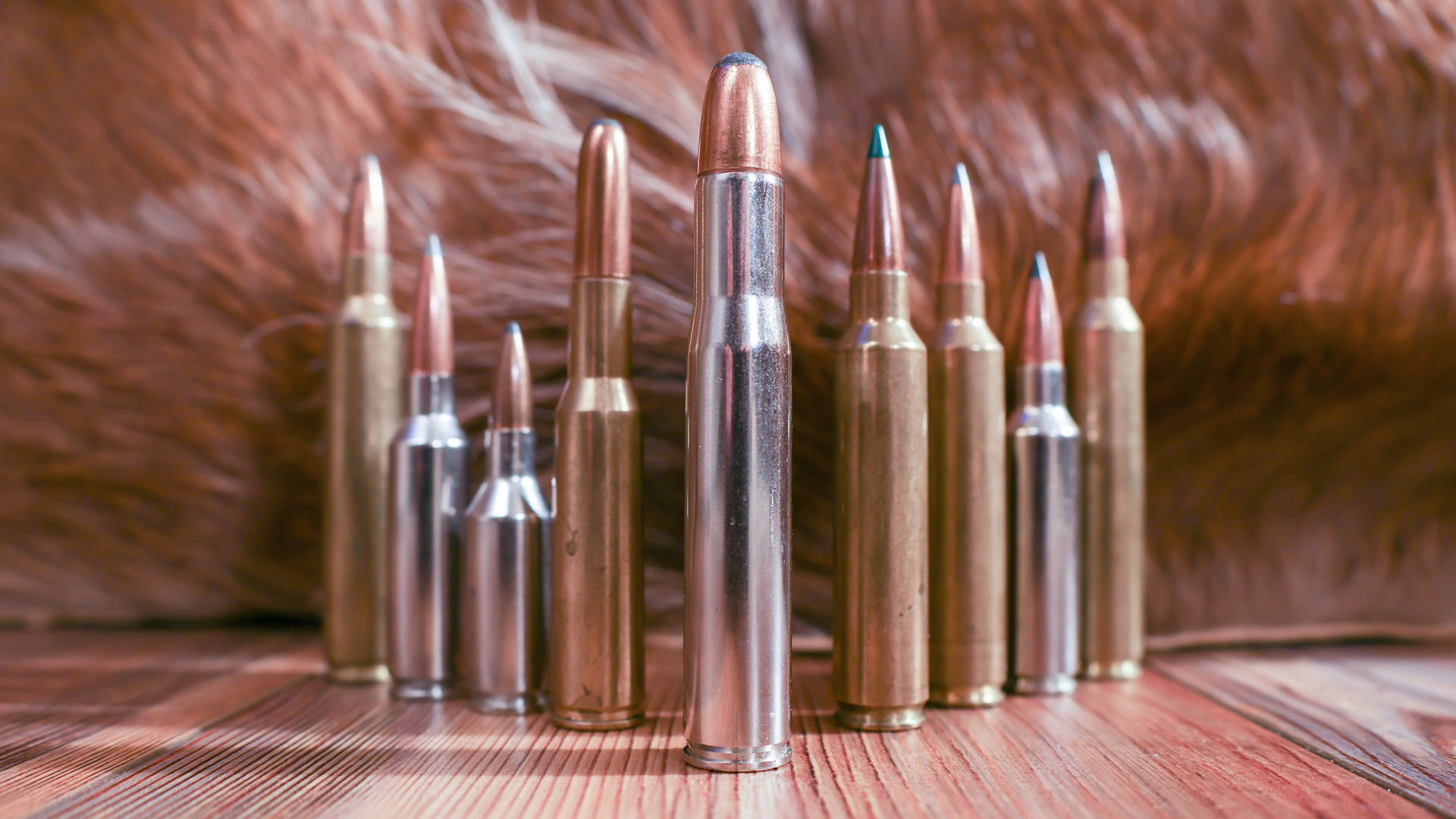
It was the brainchild of the Berlin gunsmith Otto Bock, and by all accounts was developed in or around 1905, as an all-around cartridge for the German farmers in what is modern-day Tanzania. Mr. Bock’s formula worked. It was easily housed in a Model 98 Mauser rifle—still famous for utter reliability—and offered a wonderful blend of manageable recoil and striking power. Structurally, the 9.3x62 resembles—quite closely, I might add—our beloved .30-06 Springfield. Actually, it would’ve be a resemblance to the .30-03 Springfield, as the 9.3x62 predates the ’06 variant. It uses the same 17˚-30’ shoulder angle as the Springfield, and though the case head diameter of the 9.3x62 measures .470-inch vs. the .473-inch diameter of the 7x57, 8x57 and .30-06, it will function perfectly in the Mauser rifles with no bolt face modifications. The overall case measures 2.441 inches, with a cartridge overall length of 3.290 inches. The case is slim enough to fit a handful of cartridges comfortably in the 98 Mauser, without needing a larger magazine box.
The 9.3mm bore diameter translates to 0.366-inch, placing this cartridge neatly between the American .35s and the revered .375; which isn’t a bad place to be at all. The traditional loads for the 9.3s are built around 232- and 286-grain bullets, though modern offerings extend the weight up to 300 grains. The classic 286-grain load—perfect as an all-around choice, and suitable for any and all African game—leaves the muzzle at right around 2,350 fps, generating 3,500 ft.-lbs. of energy. This combination makes a suitable choice for even Cape buffalo and elephant, if perhaps on the bottom of the scale. Though much of Africa has adopted the .375-inch bore diameter as the minimum allowed for dangerous game, a few countries—Mozambique for one—allows the 9.3mm to be used on buffalo and elephant, and it works well.

However, in North America and Europe, the 9.3mm is equally useful. It makes an excellent bear rifle, no matter the fur color, and it proved its worth to me on that big Polish boar. It also works well for elk, moose, red deer and any other large ungulate. The recoil is less than that of the .375 H&H, and can be easily managed by most shooters. The 9.3x62 is seeing a rise in popularity, and with that comes good factory ammunition. Norma offers that 230-grain monometal Eco Strike load, pushing that bullet at over 2,600 fps, as well as the excellent Oryx bullet at 232 and 286 grains, Nosler offers the 250-grain AccuBond (elk, anyone?) and the 286-grain Partition, Hornady produces a 286-grain spitzer load, and Swift (as well as Norma) makes a 286-grain A-Frame load. Most interestingly, Federal loads the 286-grain Woodleigh Hydrostatically Stabilized Solid in their Premium Safari line; this is a bullet that I’ve used in different calibers for the largest game on earth, and will attest to the incredible terminal ballistics it produces. Were I armed with an accurate 9.3x62 with this bullet, I’d confidently carry that rifle in any dangerous game situation, anywhere, including elephants and coastal brown bears.
For the reloader, the 9.3x62 poses no issues at all. Rolling your own gives an even wider selection of available projectiles, allowing the shooter to tailor the ammunition to the game pursued. Brass life is good, as the pressures are low, and there’s no belt to complicate matters, and the shoulder of the cartridge is steep enough for good headspacing, yet slight enough for easy feeding.

If you’re looking for a rifle of larger diameter than your deer gun, which will complement the 7mms and .30s well, the 9.3x62 should be a definite contender. You may find you’ll be carrying a larger bore if you get serious about the African heavyweights, but even in that situation the 9.3x62 makes a viable ‘light’ rifle on safari. Dig through the old African literature, and you’ll find the 9.3x62 has a special place in the hearts of many African Professional Hunters; that alone is a ringing compliment and good enough for me. Thank you Mr. Bock; you created a winner!
Looking for previous installments of Behind the Bullet? We've got you covered.
• .257 Weatherby Magnum
• .45-70 Government
• .300 H&H Magnum
• .25-06 Remington
• .30-06 Springfield
• 6.5 Creedmoor
• .300 Remington Ultra Magnum
• 7mm Remington Magnum
• .470 Nitro Express
• .280 Remington
• .300 Winchester Magnum
• .270 Winchester
• .222 Remington
• .45 ACP
• .404 Jeffery
• .44 Remington Magnum
• .41 Remington Magnum
• .243 Winchester
• .338 Winchester Magnum
• .357 S&W Magnum
• 6.5-284 Norma
• 8x57 Mauser
• .38 Smith & Wesson Special
• 7x57mm Mauser
• 9 mm Luger
• .35 Whelen
• .454 Casull
• .375 H&H Magnum
• .45 Colt
• .22-250 Remington
• 10mm Auto
• .308 Winchester