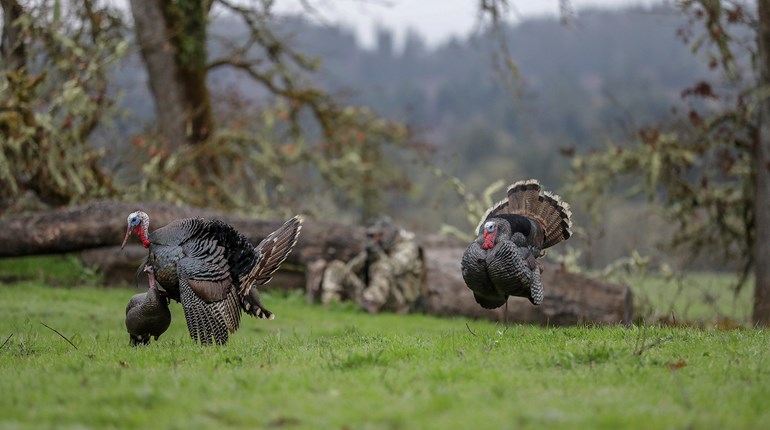
Field gobblers are some of the most frustrating turkeys on the planet. They always seem to be surrounded by hens, and just when you think you have them figured out, they feed away from you and ruin your best-laid plans. Changing up your position doesn’t seem to work either as these wary gobblers always seem to be one step ahead.
Nevertheless, do not get frustrated; get unconventional. While not typical tactics for chasing spring turkeys, these options just might help seal the deal on those headache-inducing gobblers.

The Soft Bump
A turkey’s most important sense is their eyesight. It protects them from hungry predators, including you. Nevertheless, for the “soft bump,” you’re going to try to use their eyesight against them. In larger fields, make yourself known to the birds from a long distance away, but don’t charge the birds to scatter them, as you would do in the fall. The goal is to have the turkeys slowly move away from you into the wood line. Once they’re out of your sight, move as fast as you can (don’t run with a loaded gun) to an area near to their entry point in the woods and set up for your hunt by placing a single decoy, then give them some soft calling. If done correctly, you should be able to call the birds back to the field. However, patience is key, as it may take some time for the birds to reemerge within range.
The Goose Spread
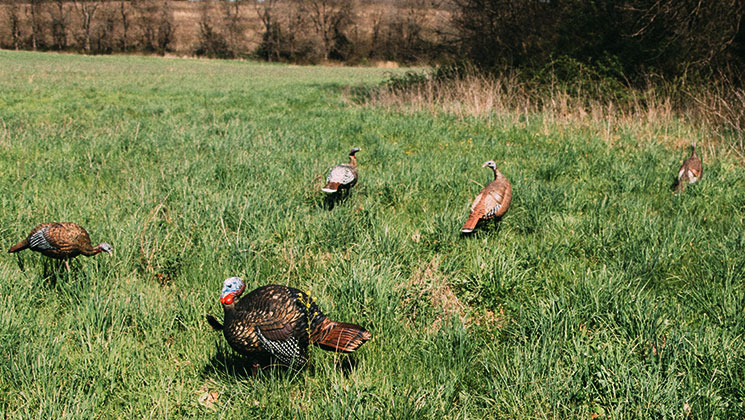
While not ideal for long walks in, this tactic can work when you run into difficulty pulling a gobbler away from his flock of hens. When using a single decoy, or even two hens for that matter, there is no real incentive for a gobbler to leave his ladies. Up the odds in your favor by laying out a “goose spread” of at least a dozen birds. Make sure to have mostly hens, with no more than a jake or two or a single strutter. A dominant gobbler will have no problem whipping a couple of young males, but if the odds are highly stacked against him, he’ll be content staying put. To add extra realism to your “goose spread,” practice using a mouth call and a box or pot call at the same time. The more you can sound like a group of birds, the better. Get that gobbler thinking your spread is more appealing than his own, and chances are he’ll break your way.
The Elk Setup
If you have a field bird that seems to respond to your calling but just won’t close the distance to come within gun range, this tactic might work well. However, this isn’t for the solo hunter; you’ll need a hunting buddy to help you out. Just like in archery elk hunting, the chance of luring a bull into range can be increased by positioning the caller about 50 yards behind the shooter. The same applies for this turkey tactic. Make sure the shooter is at the field edge, and have the caller far enough back into the woods that sounds are audible in the field, but the caller’s movements will not be easily detected by a turkey’s heightened vision. The caller can add extra realism if there is an opportunity to move around, especially simulating a hen walking away from the field. Similar to an elk caller raking trees with a branch to mimic another elk, if the turkey caller can do some leaf scratching, it just might be what it takes to get the tom to cut the distance and bring himself to gun range.