The United States is blessed to have an abundance of wildlife and wild places for us to enjoy. Thankfully, beginning in the early 1900s, visionary hunters, anglers and conservationists laid the foundation for the North American Model of Wildlife Conservation. That model is the backbone of what we enjoy today as public wildlife and many public lands, particularly our National Wildlife Refuges. Target shooters are a big part of that proud history. They are also overlooked heroes of conservation. I want to say “thank you” to our recreational shooters during National Sport Shooting Month, as they provide hundreds of millions of dollars annually that goes directly to wildlife restoration programs and hunter education.
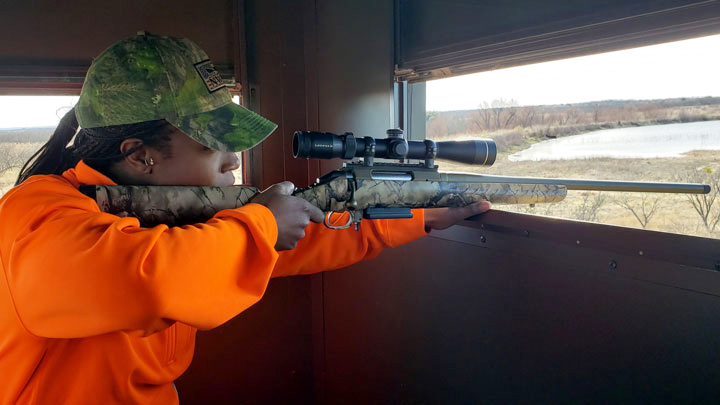
August was designated National Shooting Sports Month by the Trump Administration’s Department of Interior (DOI) in 2017. This designation officially highlights the important role that target shooting plays in conservation and the overall economy. No matter if it’s plinking cans with a .22 or busting clays with a shotgun, target shooting is a fun way to enjoy the outdoors.
There are more than 52.1 million target shooters in the United States, which is up 28 percent since 2012. Target shooting promotes training, safety, storage and efficiency for a diverse group of people of all races and genders. It also serves as a gateway for hunting and other forms of outdoor recreation.

Each target shooter helps to contribute significantly toward conservation through the U.S. Fish and Wildlife Service’s (Service) Wildlife and Sport Fish Restoration (WSFR) program. The money they spend—collected through excise taxes on guns and ammunition under the Federal Aid in Wildlife Restoration Act (aka the Pittman-Robertson Act)—is then apportioned to state wildlife agencies for wildlife restoration programs and hunter education.
Since its inception in 1939, the Wildlife Restoration Act has generated $12.8 billion for conservation. It is a fantastic example of a user-pay, public-benefit program that highlights a successful partnership between the Service, state fish and wildlife agencies, industry partners, and sportsmen and sportswomen. This partnership has led to the purchase of about 4 million acres of land to support wildlife, with an additional 40 million acres being managed for wildlife under agreements with landowners.
Target shooters support much more than conservation. They invested $16.9 billion in 2016 on equipment and travel and supported 329,000 jobs, according to the 2018 National Shooting Sports Foundation’s (NSSF) report “Target Shooting in America: An Economic Force for Conservation.” In 2019, these industries related to recreational shooting were responsible for more than $60 billion in total economic activity in the United States, according to the NSSF’s “Firearm and Ammunition Industry Economic Impact Report 2020.”
In 2019, President Trump signed two significant changes that directly benefit recreational shooters. The Target Practice and Marksmanship Training Support Act facilitates the construction and expansion of public target ranges, and the Modernizing the Pittman-Robertson Fund for Tomorrow’s Needs Act makes hunter recruitment and recreational-shooter recruitment an eligible activity under hunter education funding.
Projects have already started, including:
• A $2.5 million shooting range enhancement at the Mike Commander WMA Shooting Range near Albany, Ga. The Georgia Department of Natural Resources is enlarging the 200-yard rifle range to 15 positions while also expanding full ADA (Americans with Disabilities Act) access to the rifle, pistol and archery range, and adding a new 3-D archery trail; and
• A new $2.25 million shooting range in Marion, N.C. This new shooting range facility will include a 100-yard rifle range, a 25-yard pistol range and a 3-D archery course. The land is currently owned by McDowell County, which is partnering with the North Carolina Wildlife Resources Commission to construct the range.
These ranges are one more tool that the Trump Administration is using to create important outdoor opportunities for the public.Since day one, the Trump Administration has prioritized recreational access to public lands, particularly for hunting and fishing.

The Service recently helped grow that legacy by proposing new and expanded hunting and fishing opportunities across more than 2.3 million acres at 97 national wildlife refuges and nine national fish hatcheries. This rule is the single largest expansion of hunting and fishing opportunities by the Service in history and brings the total expansion to more than 4 million acres since President Trump took office.
In addition, President Trump recently signed the Great American Outdoors Act, which will provide up to $9.5 billion over the next five years to repair critical facilities and infrastructure in our national parks, forests, wildlife refuges, recreation areas and American Indian schools. It will also permanently fund the Land and Water Conservation Fund to the tune of $900 million a year to invest in conservation and recreation opportunities across the country.
Thanks to the continued support of target shooters, the Trump Administration, DOI and the Service will continue to deliver exciting outdoor opportunities for the American public and carry on the tradition of the North American Model of Wildlife Conservation.