 On a recent turkey hunting trip in Kentucky, Brenda Valentine introduced me to the alarming alpha-gal allergy—which she has. If you thought a hunter's worst nightmare was missing the buck of a lifetime, you're close, but this might be worse. Alpha-gal allergies are a reaction to Galactose-alpha-1,3-galactose, which can be found in all mammal meats except primates, and it manifests itself by forcing its host to become vegetarian.
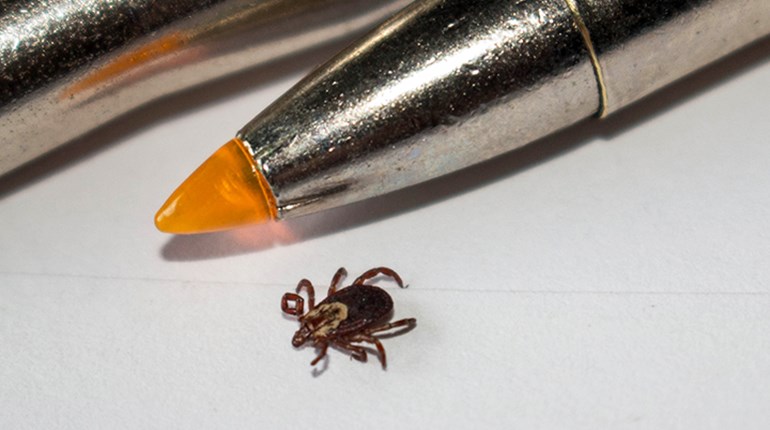
Ticks are known to provide a host of undesirable diseases, but you can now add life-threatening allergy to the list. In a study by two allergists at the University of Virginia, it was found that the allergic reaction is related to the bite from a lone star tick, commonly found in the southeast. I have seen these creepy little buggers first-hand, and have never flicked a bug faster. I hope to never experience forced vegetarianism (not including fish, turkey and chicken).
The unique thing about Alpha-gal is that it is the first-ever case of delayed anaphylaxis. Hours after eating certain meats, patients claimed to waking up in the middle of the night from anaphylaxis. Like most allergies, patients experience different reactions from nothing at all to life-threatening.
The alpha-gal allergy in relation to tick bites is a recent discovery. A blood test is needed to diagnose the allergy. People who have the allergy not only need to avoid red meats (especially the fatty ones), but should also beware of certain gelatins and drugs that contain alpha-gal, according to the Washington Post.
If you're starting to hyperventilate at this point, and feel like sticking your head in the ground (don't do that; there could be ticks!), fear not! There is a silver lining. As long as you avoid a bite from another infected tick the allergy can go away with time.
One writer from the Washington Post said, "There's this compensation: A vegetarian diet can boost your health." In response to that statement I will defer to my hero Ron Swanson (see video below). So make sure when hunting in warmer-climate locales that you are prepared for ticks. Don't say I didn't warn you…