Photo Courtesy of Joep van de Vlasakker
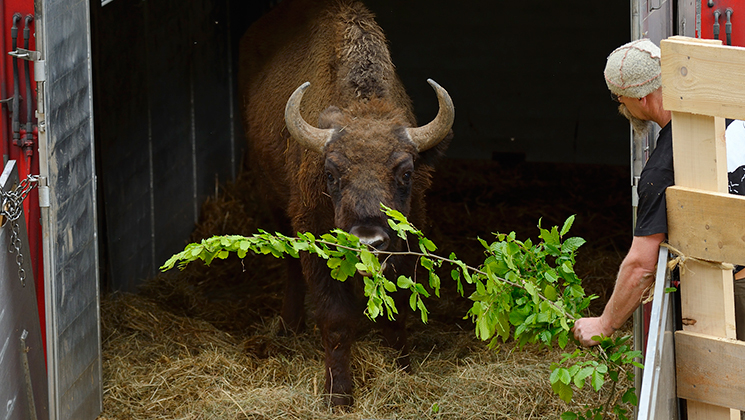
If the American bison is the largest terrestrial animal in North America, then what animal is the largest in Europe? The European bison, of course. But while it once roamed continent-wide, the less prolific European species was almost extinct by 1919. Thanks to the captive breeding of 54 animals kept in zoos, their number now totals 3,000 in the wild, and the Netherlands-based group Rewilding Europe is set to release 24 more on Apr. 24. The initiative, led by a Dutch group of conservationists and scientists, is part of an experiment to return the continent’s large grazing animal species—bison, red deer and wild horses—to their former numbers.
In restoring European bison to its historic range, four animals will be introduced to the Netherlands’ Veluwe region with 20 others released in Romania’s Maashorst nature preserve to join four others that were recently released. According to news reports, Rewilding Europe hopes to establish at least five herds of 100 bison each by 2022. It deems the reintroduction of European bison to be particularly critical as this animal once roamed from England to Russia and thrived in lowland areas from Sweden and Greece to France. By comparison, nearly 30,000 American bison inhabit America, with 11,000 of the wood bison subspecies inhabiting Canada. For perspective, even the endangered black rhino has an estimated wild population of 5,000.
If all goes well, Europeans and tourists may one day be treated to regular scenes of grazing European bison herds. Plans for 2017 already include releasing bison in Croatia’s Velebit mountain range. In addition to population control by lynxes, bears and wolves, hunters eventually may play a role. While there would be no-hunting zones in core regions, bison that wander into the surrounding countryside one day may be fair game—and the sale of game likely would become an important source of income for local residents.
In case you are curious, the European bison is taller and lankier than its American counterpart. Its horns face forward, making for better sparring with competitors, while horns of the American bison sweep up and come in handy for charging and goring predators.