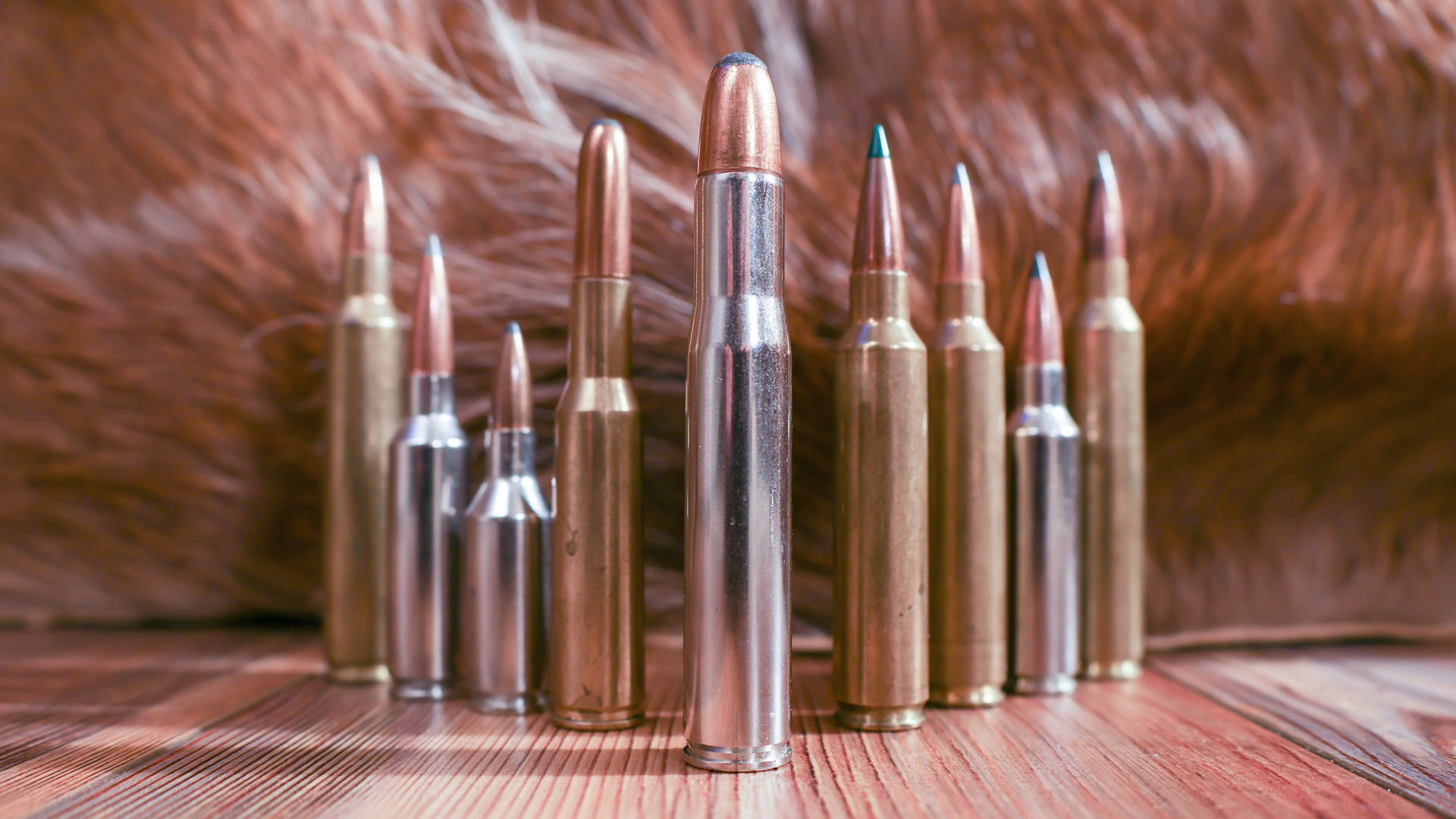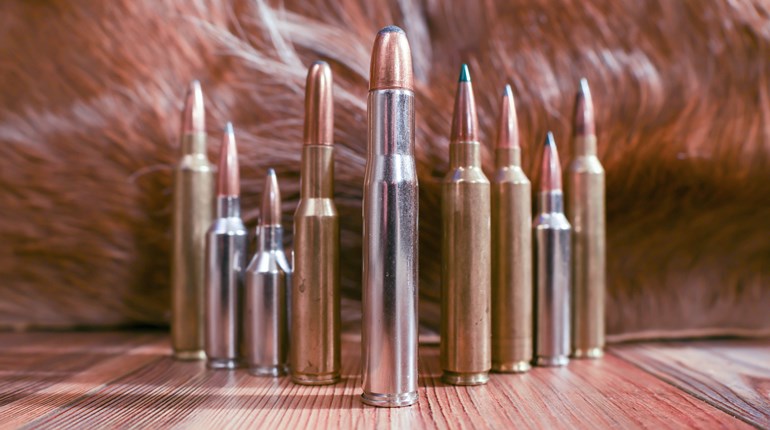
Metric caliber designations in America have always seemed to pose an issue; perhaps they don’t roll off the tongue as easily as decimal portions of an inch, or perhaps the metric system still confounds so many of us that it seems like a foreign language to us. No matter the reason, until the recent rise of the 6.5mm cartridges, the metric-labeled cartridges have never really had the commercial success that others have—with the exception of the 7mm Rem. Mag.
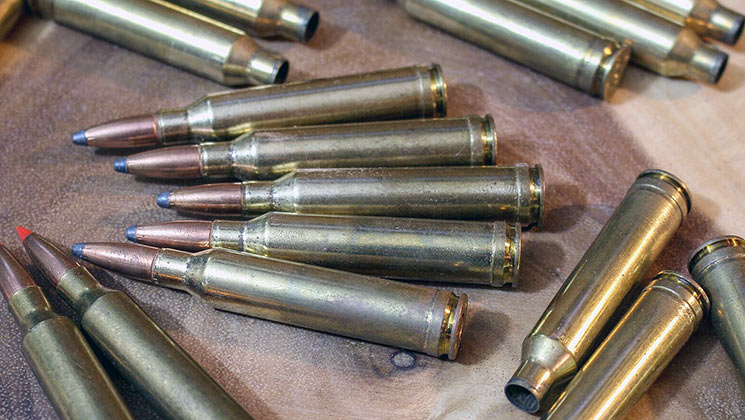
It came along in 1962, introduced in the new-fangled Remington Model 700 rifle. Banking on the success of the Winchester trio of belted magnums—the .264, .338 and .458—which were introduced in the 1950s, Remington used the same formula for their 7mm Rem. Mag. Using the belted .375 H&H case, shortened to a length of 2.500” in order to fit in a long-action receiver, the steep-shouldered, fatter case gave plenty of room for powder, and yet positive headspacing off the shoulder. The belt, you see, is how the .375 H&H and .300 H&H cases are headspaced, but it serves no real purpose in any of the other bottlenecked cartridges that were derived from them.
 As an interesting note to those who enjoy cartridge history, Remington’s Seven-Mag was not the first belted magnum of this caliber or length. Just before the .375 H&H Belted Magnum was released in 1911, Holland & Holland released the .275 H&H Magnum; a 2.500” case with dimensions so similar to the 7mm Rem. Mag. that you’d do a double-take. I guess sometimes it takes a half-century for an idea to catch on, but I digress.
Remington’s concept of taking the wide selection of 7mm bullets, and launching them from the larger case made perfect sense; it offered a considerable velocity increase over the time-proven 7x57mm Mauser, as well as improving the ballistics of Remington’s .280 Rem. It can take full advantage of the heaviest bullets in the 7mm lineup; the 175-grain bullets leave the muzzle at just under 2800 fps, making a good load for the biggest of the African plains game, and a good elk/moose/bear load here in the States. Recoil is just a bit less than that of the .300 Magnums, yet can still pose an issue for the recoil-sensitive. The 7mm Rem. Mag. fits nicely in any .30-’06-length action, and coming from the Big Green factory, ammunition was readily available. To this day, it still ranks very highly in the sales records of most ammunition makers, and with good reason: it is a very effective hunting cartridge.
I was raised in a .30-caliber household. My father, after completing basic training at Fort Leonard Wood, Missouri, had a definite penchant for the .308 Win.—a cartridge he carries to this day. He will still argue with me about 7mm vs. .30 caliber, insisting that the heavier bullets and greater diameter give the .30s a definite advantage. I do love the .30s, and have spent a considerable amount of field time with both the .308 and the .300 Win. Mag., but there is no denying the fact that the 7mm bore is a perfectly viable hunting choice for almost all the species for which you’d use a medium bore. The 7mm Rem. Mag. is equally at home in the sheep mountains, the open prairie and the hardwoods. There is a load available for nearly every hunting situation, be it up close or far away.
With strong bullets like the Swift A-Frame, Norma Oryx, Federal Trophy Bonded Bear Claw, Nosler Partition and Barnes TSX, the 7mm Remmy will punch through the tough shoulder bones of the largest elk, moose or bear, with energy to spare. If you hunt in an area where longer shots are the norm, the bonded core boat tail spitzers are probably a good idea. The Nosler AccuBond, Hornady InterBond, and Swift Scirocco II are all tough customers, yet will flatten trajectories and resist wind deflection. If the cup-and-core bullets are your thing, the Hornady ELD-X and Sierra GameKing will make a great long-range deer or antelope bullet. The 7 Mag will drive the 150-grain bullets to just over 3000 fps, the 160-grainers to just over 2900 fps, and those big 175s at 2,750 fps or so, depending on the manufacturer and barrel length. Should you wish to use the lighter bullets on smaller game species, the 139 and 140-grain bullets make a fine choice. Federal’s Trophy Copper Tipped 140-grain load at 3150 fps or Hornady’s Superformance 139-grain GMX load at 3,190 fps would make a wonderful choice for a trophy buck across a hay lot or bean field.
As a case, the 7 Mag is of the older school of thought, in that all cartridges with the Magnum moniker had to wear that telltale belt of brass. The modern trend of employing beltless cartridges isn’t completely unfounded—as we’ve seen on those families of cartridges based on the .404 Jeffery and the .416 Rigby—but having a belt doesn’t really pose an issue either. Yes, for the reloader, you may see the classic case stretching just north of the belt when the cases have been fired too many times, but that issue is no different with any of the other belted magnums.
Remington’s 7mm Magnum came on the scene and won the hearts of many hunters looking to use a bullet of less than .30 caliber, and quickly overtook the .264 Win. Mag., forcing it into near-obscurity. And, in spite of the myriad attempts to produce a 7mm Magnum that will better the performance of the Remington version, it still maintains its seat at the head of table.

Looking for previous installments of Behind the Bullet? We've got you covered.
• .470 Nitro Express
• .280 Remington
• .300 Winchester Magnum
• .270 Winchester
• .222 Remington
• .45 ACP
• .404 Jeffery
• .44 Remington Magnum
• .243 Winchester
• .338 Winchester Magnum
• .357 S&W Magnum
• 6.5-284 Norma
• 8x57 Mauser
• .38 Smith & Wesson Special
• 7x57mm Mauser
• 9 mm Luger
• .35 Whelen
• .454 Casull
• .375 H&H Magnum
• .45 Colt
• .22-250 Remington
• 10mm Auto
• .308 Winchester