Duck Hunting Tip: Follow Their Patterns

by
posted on December 1, 2017
** When you buy products through the links on our site, we may earn a commission that supports NRA's mission to protect, preserve and defend the Second Amendment. **
followduckpatters_lead.jpg

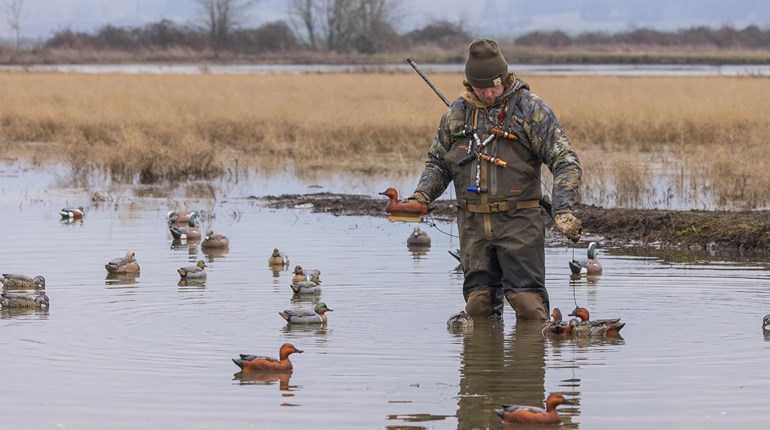
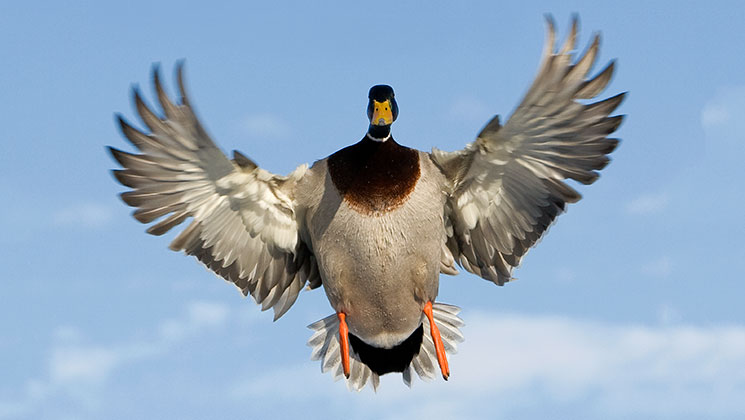
Duck hunters are creatures of habit: Get up long before the sun, report to your favorite spot, throw out the decoys and wait for the birds to start moving. Most days it’ll work, and if it doesn’t, you can always come back for an evening shoot and nail ’em before sunset, right

Not always. Duck hunters are creatures of habit because ducks are creatures of habit—but not every flock plays by the same rules. If you’re willing to make adjustments to your schedule, you could be on your way to greater success at all hours of the day.

Duck Commander’s Jase Robertson ran into a challenging scenario a few years ago. He and the Duck Commander crew acquired a river-bottom field near an area where they timber hunt, thinking it would hold ducks in the area, perfect for their late-season timber hole. Over the course of the season that field became a giant roosting hole. The problem? For whatever reason, the boys could never seem to kill any ducks in those adjacent timber holes.

"The ducks would pour into the field after sunset, but would get up and leave before sunrise,” Jase said. “It didn’t seem to bring any ducks to our timber holes. All the ducks would be there when we drove to the blinds before daylight, and then would leave the field before legal shooting hours began.”

Nothing Jase and his crew tried worked. Even during an evening hunt, the crew noticed the birds would get up from everywhere in that field when they drove out to the blind.

Upon further investigating where these late-afternoon birds came from and when they arrived in the field, Jase determined these ducks weren’t the same ones that would roost there overnight. At first he thought it was a phenomenon, but over the course of time he realized it was a regular pattern.

After Jase convinced the rest of the Duck Commander crew, the guys started hunting the hole from 1-4 p.m. The result? It became one of their most productive honey holes. “It’s important to go where the ducks are,” Jase noted, “but make sure you’re hunting during their patterns, and not always what is convenient for you or the traditional duck hunting methods.”

Quick Tip: If you want to try duck hunting but don’t know where to start, check out these tips and how-to videos for beginners at duckcommander.com.

Latest

LEDENRA YES Logo
LEDENRA YES Logo

NRA Announces 2026 Y.E.S. Grand Scholarship Recipients

The National Rifle Association has awarded $15,000 in college scholarships to attendees of the 2025 NRA Youth Education Summit (Y.E.S.) through the Y.E.S. Grand Scholarship program.

Recipe: Venison Empanadas

When Brad Fenson makes venison empanadas, the goal is simple. Keep the meat front and center, add enough flavor to complement it, and make a filling that stays juicy without overpowering the wild proteins. The filling is rich, balanced, and built to highlight venison, whether baked or fried.

Proof Research Unveils Shorter Barrels for Elevation 2.0 and MTR 2.0

Proof Research has announced shorter-barrel configurations for the Proof Elevation 2.0 and Elevation MTR 2.0. Both the Proof Elevation 2.0 and Elevation MTR 2.0 in shorter barrel configurations are available in Tactical Flat Dark Earth (TFDE) and the all-new Midnight color, offering shooters greater customization options alongside Proof Research's carbon fiber technology.

Range Review: Midwest Industries Bounty Hunter Revolver Brace

Thanks to Midwest Industries new Revolver Brace, you can easily mount a stabilizing brace to your favorite hunting revolvers. Check out B. Gil Horman's review of this game-changing product.

First Look: Marlin Mad Pig Customs Model 1894

Marlin has introduced its Mad Pig Customs Model 1894, a rifle developed—as its name implies—in collaboration with Mad Pig Customs. Built on Marlin's iconic lever‑action rifle platform, this model delivers modern, factory‑installed features previously found only on custom builds.

Funding Authorized to Conserve Critical Wetland Habitat

The Department of the Interior has announced that $44.79 million in North American Wetlands Conservation Act (NAWCA) funds have been approved by the Migratory Bird Conservation Commission. They will provide the U.S. Fish and Wildlife Service—and its partners—the ability to conserve, restore or enhance 185,203 acres of critical wetland and associated upland habitat for migratory birds across the United States.

Interests


Get the best of American Hunter delivered to your inbox.