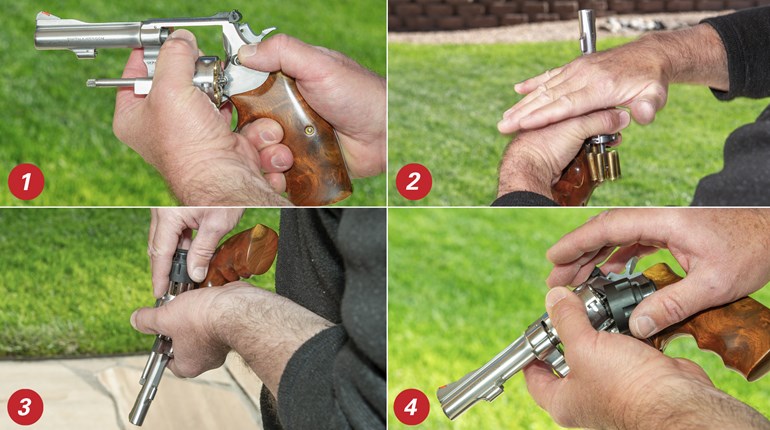
Many years ago I bought my first new handgun, a Ruger Single-Six chambered in .22 LR with a 5.5-inch barrel. It was a planned purchase, not just the result of an opportunistic moment where an interesting gun was found at an irresistible price. For years I thought I had chosen the gun, but decades later with numerous Ruger single-actions of various calibers residing in my vault, I realize I had it backwards. Ruger single-actions chose me.
That Single-Six was the perfect hunting and plinking handgun for me at the time. The gun fit my hand, the ammo fit my teenage budget, and the two together fit my field needs. Consider also the popularity of TV Westerns in the late 1960s and even my fantasy adventures were partially satisfied by the little Ruger. Fast-forward five decades and, once again, a new Ruger single-action revolver with all the features necessary for my current lifestyle has chosen me.
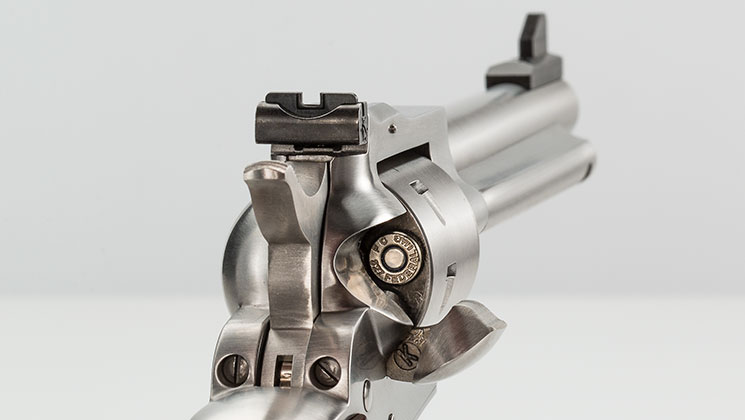
The Ruger Single-Seven (offered exclusively through firearm distributor Lipsey’s) has the same frame size as the older rimfire Single-Six, but it is chambered in .327 Federal Magnum. Except for the sights, all the visible metal is stainless steel. The laminated hardwood grips have an orange tint and a Ruger medallion inset.
Without cylinder flutes, the Single-Seven can hold one more round than the original .22-caliber Single-Six. While seven vs. six rounds in a trail, plinking and small-game revolver doesn’t sound like a big deal, the general rule of thumb is that more rounds are better than fewer should a situation turn nasty on a remote trail far from help. An extra round of .327 Fed. Mag. provides peace of mind.
The highly visible, black iron sights on the Single-Seven present a crisp sight picture during daylight hours. They are adjustable, something I consider mandatory on a gun that shoots a mix of ammo with such vastly different power levels. Fact is, the .327 Fed. Mag.’s operating pressure of 45,000 psi is exceeded only by the mighty .454 Casull. This explains the high velocities and flat-shooting capabilities of .327 Fed. Mag. ammo. But also consider the revolver is compatible with milder .32 H&R Mag. loads, and the adjustable sights make a lot of sense.
I tested four different loads—two .327 Fed. Mag. and two .32 H&R Mag.—on a cloudy, late afternoon with intermittent rain. Even with prescription shooting glasses, I struggled with sight picture under the poorly lit conditions. I’ll take credit for the good groups and reluctantly accept responsibility for the bad ones. Vertical stringing was evident at 25 yards, but I wouldn’t hesitate to hit the trail packing the Single-Seven.
I did not clean the gun before starting the shooting tests and felt the trigger was initially a bit gritty with some creep. It seemed to smooth itself out about halfway through the session, resulting in a pull weight of about 4 pounds and minimal creep.
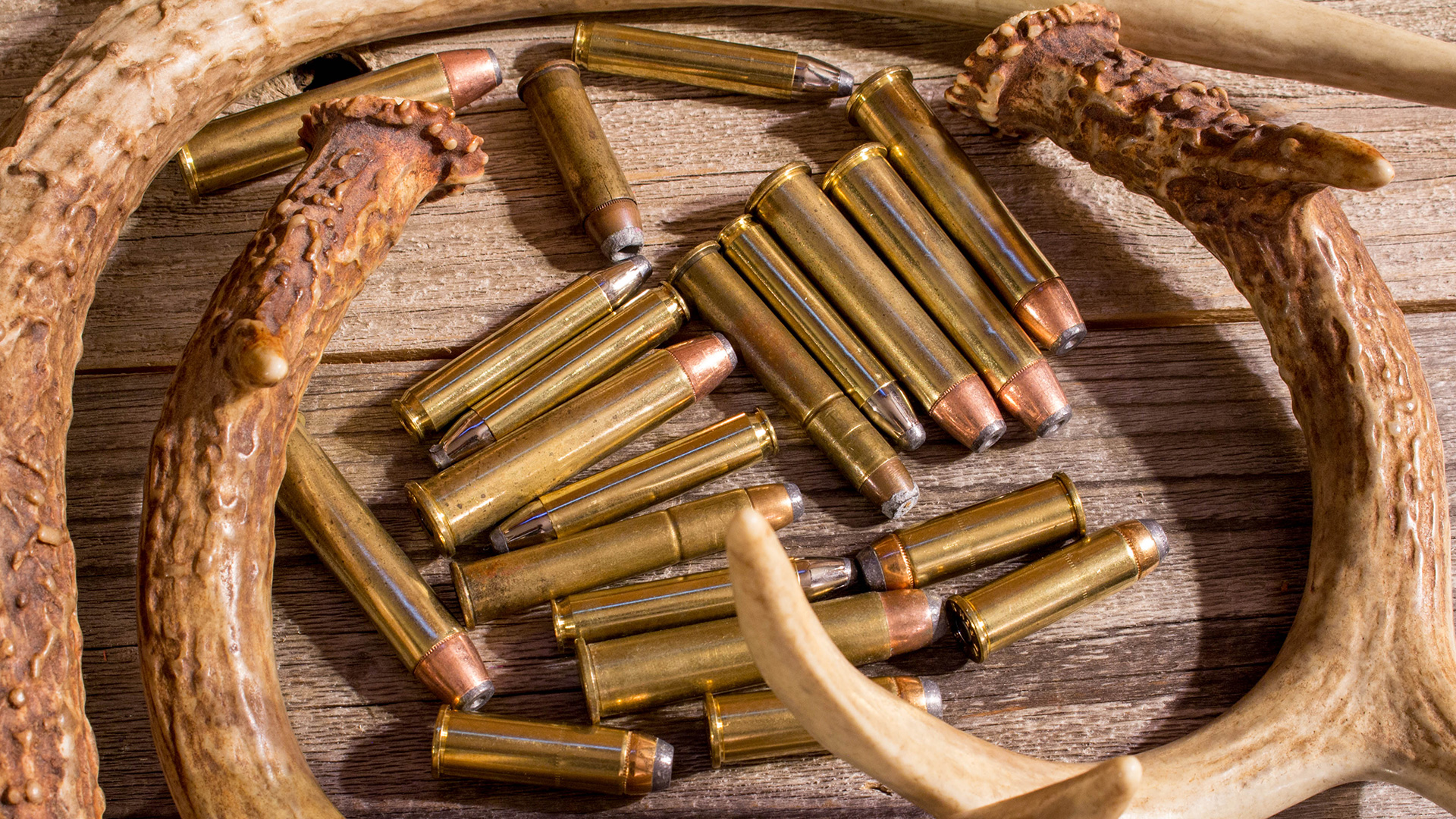
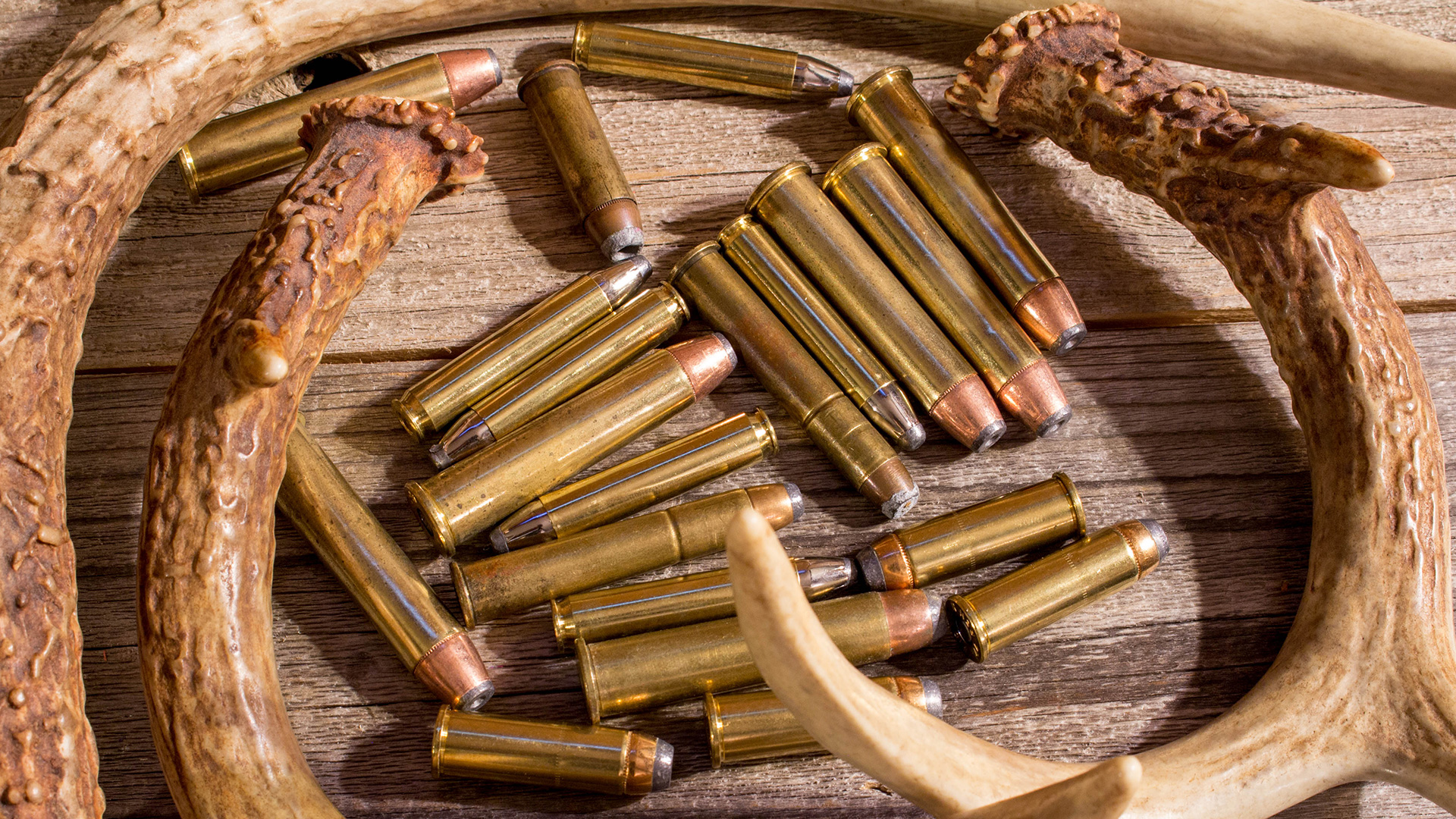
Before carrying the Single-Seven, I would put some serious thought into matching the ammo I selected to the primary purpose of the outing. Ideally, I’d find a couple of different loads that would shoot pretty much to the same point of aim inside 50 yards without changing the sight settings. What’s really fascinating is the extremely wide range of ammo performance available for this little .32-caliber revolver.
For personal defense on the trail, I tend to favor heavier bullets; in this case, I’d consider something from 80 to 115 grains. If 115-grain hardcast and jacketed hollow-point loads grouped close enough to one another, I might even alternate these heavyweight rounds in the cylinder. I expect loads in this upper weight range, particularly the jacketed hollow-points, to work well for smaller whitetails and exotic deer/antelope available on Texas game ranches. For javelina, coyotes and anything smaller, you could probably stick with the .32 H&R Mag. loads. Consider the ranges at which you’re an effective handgun hunter, and if you can take advantage of flat trajectories and consistently make hits past 50 yards, select your loads accordingly.
Two warnings: First, wear hearing protection, particularly if you’re using .327 Fed. Mag. loads. These high-pressure rounds will hurt your ears, even in the open outdoors. Second, don’t get casual about your shooting grip in the field. The .327 doesn’t generate severe recoil, but its pressures cause some muzzle flip. If you take a shooting rest and place part of your palm between the Single-Seven’s grip and a rock, you’ll regret it.
Despite my failures to score on two outings with the Ruger .327 revolver, I’m still excited about future prospects. The Ruger single-action and I have a lot of history together, and the Single-Seven and I will be spending much more time together afield.

Technical Specifications:
Type: single-action revolver
Caliber: .327 Fed. Mag.
Capacity: 7 rnds.
Barrel: 4.63", 5.50" (tested), 7.50”;6 grooves, 1:16" RH twist
Trigger Pull Weight: 4 lbs.
Sights: adjustable rear notch, fixed front ramp
Grips: laminated hardwood
Metal Finish: stainless steel
Overall Length: 11"
Weight: 36 ozs.
MSRP: $669