Sometimes, having the biggest, fastest or most powerful of a particular thing has an appeal. Couple that with the fact that Americans love velocity—not to mention .30-caliber cartridges—and you have a market for seriously fast .30-caliber magnums. In 1925, the .300 Holland & Holland Magnum bettered the velocity of the then reigning 30-06 Springfield, and then the .300 Weatherby Magnum topped the Super 30’s velocity. Both Norma and Winchester entered the .300 Magnum race—with their .308 Norma Magnum and .300 Winchester Magnum, respectively—in the early 1960s, but it would be over thirty years until the velocity barrier was pushed upward.
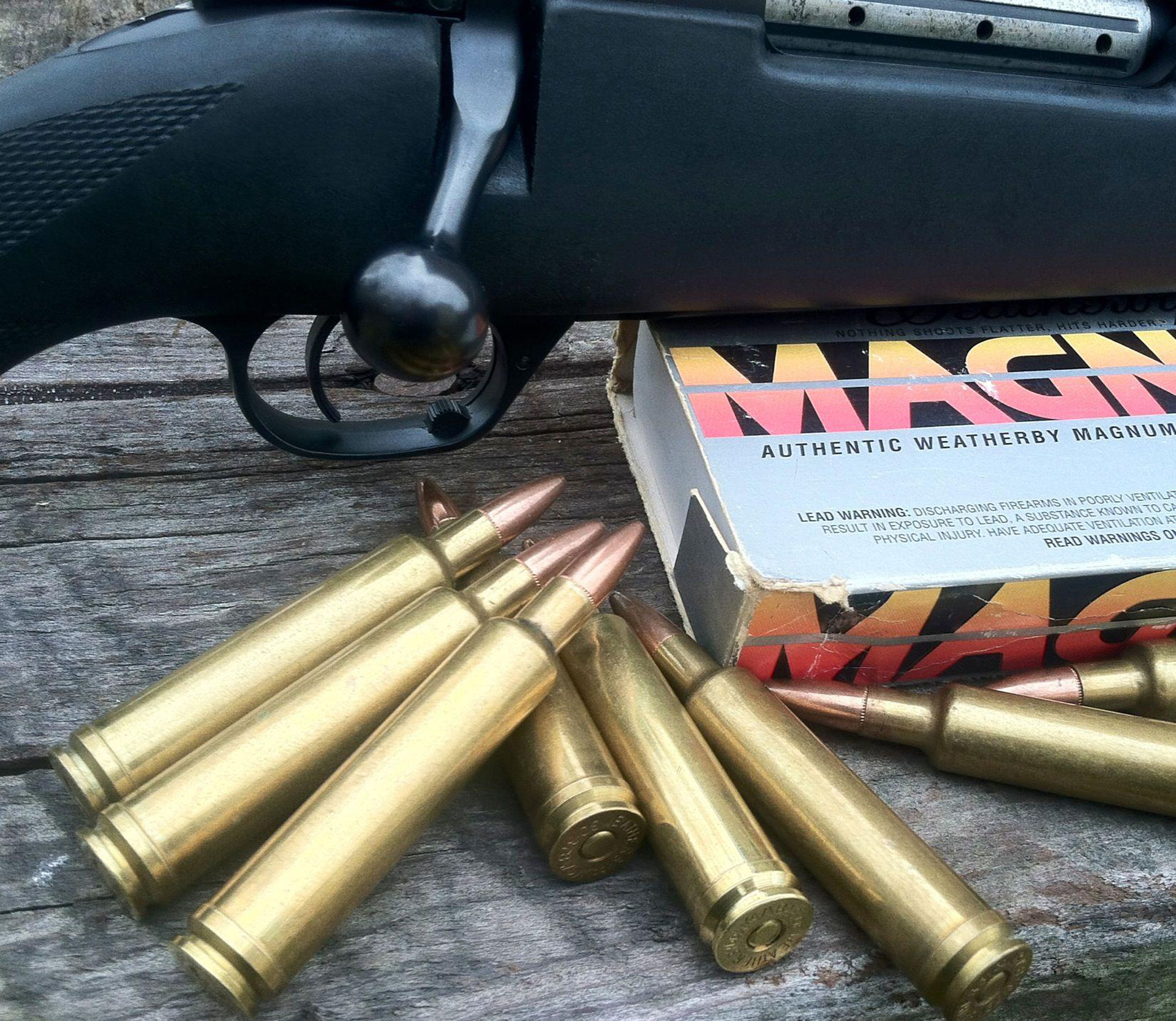
In 1996, Weatherby finally released an experimental cartridge which had been in development since the end of the 1950s. In an effort to develop a rifle cartridge for the U.S. military which would break the 6,000-fps mark, Roy Weatherby took his behemoth .378 Weatherby Magnum case, and necked it down to hold .30-caliber bullets. It did—through the use of slow-burning propellants—end up breaking the 6,000 fps barrier, and in wildcat form set the 1,000-yard accuracy record. Like its father, it is a belted case, yet larger in diameter than the classic Holland & Holland belted design. The famous Weatherby double radius shoulder is there as well, though the case uses the belt for headspacing purposes. The enormous case has a case-head diameter of 0.579 inches, and a length of 2.913 inches, sporting a cartridge overall length of 3.648 inches. A cartridge that long will definitely require a magnum-length receiver. In factory-loaded ammunition, a 180-grain bullet will achieve 3,400 fps, generating over 4,600 ft.-lbs. of energy at the muzzle.

The .300 Remington Ultra Magnum was released to the shooting public in 1999, being loosely based on the Canadian Magnum series of cartridges. Those in turn were based on the beltless 404 Jeffery, with most of the body taper removed. The .300 RUM (as it is often abbreviated) uses the smaller 0.534-inch case head of the Holland & Holland cases (as opposed to the 0.543-inch case head of the 404 Jeffery), presumably for ease of common bolt-face construction, and therefore the case is slightly rebated. The case measures 2.850-inches long—with a maximum cartridge length of 3.600 inches—with both those dimension being common to the magnum-length H&H cases, so the .300 RUM will fit perfectly in a magnum-length receiver. Being beltless, the .300 RUM uses its 30-degree shoulder to handle headspacing duties. In factory ammunition, you'll see a 180-grain bullet leaving the muzzle at a velocity of 3,100 to 3,250 fps, depending on the brand.

Both of these cartridges have room for an enormous amount of powder, with the .30-378 Weatherby Magnum offering nearly a 25-percent increase in case capacity over the .300 Remington Ultra Magnum. Looking at the factory ammunition advertised velocities, the muzzle velocity should see a correlative increase for the larger case, but that hasn’t exactly been my experience. In fact, my experiences with 180-grain factory ammunition from Weatherby, in a Mark V rifle, have shown velocities around 3,250 fps rather than the 3,400 fps mark. While the .300 Remington Ultra Magnum seems to work hard to get to that mark—at least in factory ammunition—it truly comes so close so as not to matter. When you handload for the two cartridges, you’ll actually see a velocity advantage for the .300 Remington Ultra Magnum, despite the increased case capacity of the .30-378 Weatherby Magnum. I have safely pushed the 180-grain bullets to 3,375 fps in the .300 RUM case, while in the .30-378 Weatherby Magnum case, anything above 3,250 fps developed high pressure signs (sticky extraction, cratered primers). Both cartridges have the capacity to use over 100 grains of slow-burning powder, with the Weatherby case breaking the 115-grain mark with the slowest powders, so you will definitely need a large rifle magnum primer for both cases.
The .30-378 Weatherby has a slightly longer neck than does the .300 RUM (0.344 inches vs. 0.306 inches), so in theory the larger case would offer better neck tension, but I’ve had no issues whatsoever with the RUM’s design. Both cartridges can be wonderfully accurate; in fact through handloading, ¾-MOA is easily achievable, especially with the modern consistent projectile designs. For hunting loads, I prefer a premium bullet for both of these cases, as the impact velocities can be very high, especially at close ranges. I have had good results with the Swift Scirocco II and the Nosler AccuBond, though my dad insists on the 180-grain Sierra ProHunter flat base cup-and-core bullet, having used that to take game animals from pronghorn antelope to caribou to moose, as well as tougher African plains game species like wildebeest with his .300 RUM.
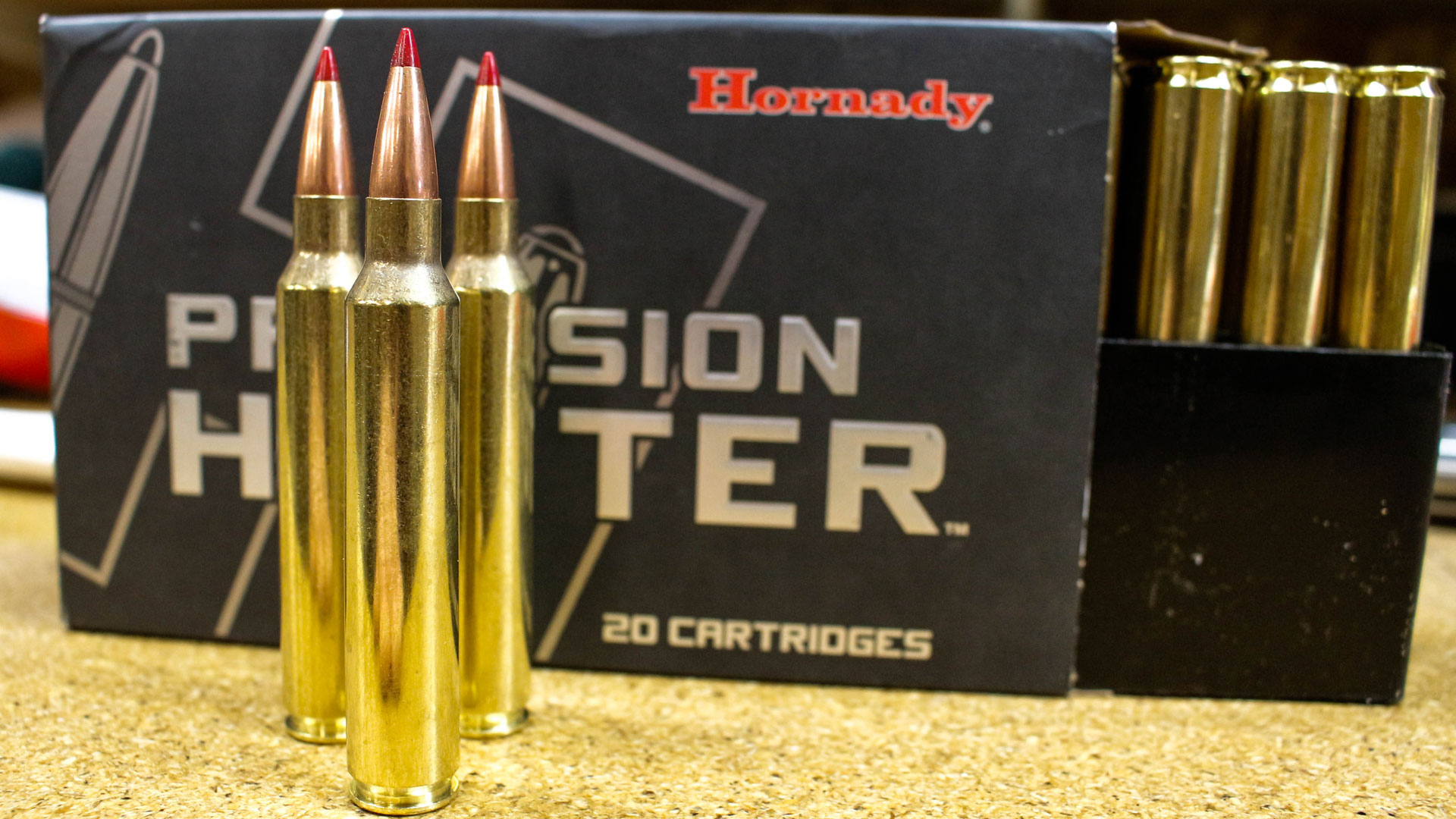
Choosing between the two cases, I’ll crown the .300 Remington Ultra Magnum, for a few reasons. Firstly, it is the more efficient cartridge, delivering very impressive velocities from a significantly smaller powder charge. Secondly, the rimless design extends case life, as you don’t get the stretching above the belt, and the cases for the .30-378 Weatherby are plenty expensive to begin with. The rimless .300 RUM headspaces off the shoulder, rather than the belt, so that theoretically offers better chamber concentricity. Thirdly, the cost of ammunition for the .300 RUM is considerably lower (sometimes half the price of the Weatherby stuff), while the selection of brands is much higher than that of the .30-378 Weatherby Magnum. For the Weatherby cartridge, you’ll see ammo available from Weatherby, Nosler and Hornady while the .300 RUM is produced by Remington, Federal Premium, Norma, Nosler, Barnes, Swift and HSM. It seems that the huge Weatherby Magnum is relegated to a niche cartridge, while the .300 RUM remains the most popular of the RUM family, with a much larger following. I think the .300 RUM just makes more sense.