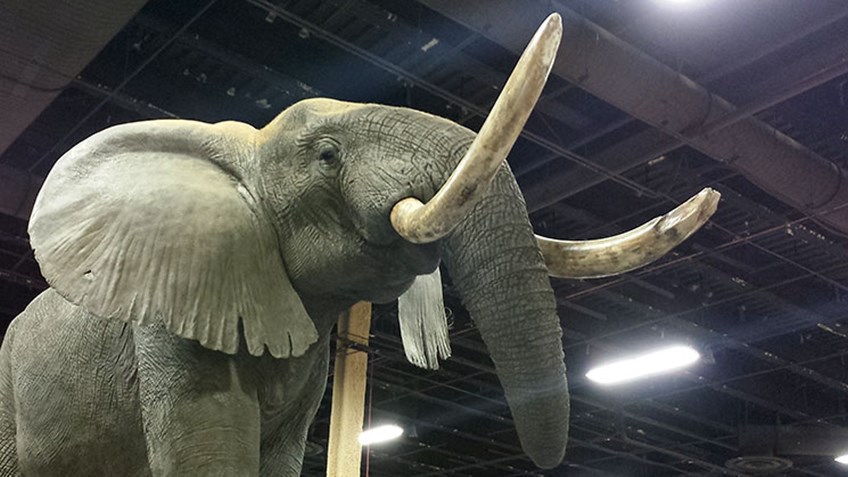
How many elephants does it take to create a pyre of ivory in excess of 100 tons? Ask Kenya, which today burned 105 tons of confiscated illegal ivory tusks, ivory products and rhino horns in the capital city of Nairobi in what is said to be the largest ivory burn in world history. As for what could possess someone to light the match, Kenyan wildlife officials explain it's a display that will combat the growing threat of poaching. If that reasoning makes you scratch your head, you're not alone.
As reported by the Washington Post, CNN and countless other news outlets, "From a Kenyan perspective, we're not watching any money go up in smoke," said Kenya Wildlife Service Director General Kitili Mbathi. "The only value of the ivory is tusks on a live elephant." What? Further sidestepping common sense, officials admitted the incinerated ivory was worth more than $150 million. And we hunters thought the ivory burn reported by the NRA Hunters' Leadership Forum last week in Camaroon was bad. Oh, it was--accounting for 2,000 poached elephant tusks. It's just that this burn is so far past an amount most of us can even visualize.
The market for ivory across much of Asia, and particularly China, has remained strong in recent years, driving poachers in sub-Saharan Africa to poach vulnerable species. Kenyan officials hope the attention the ivory burn is receiving will jolt ivory consumers in China who might not understand the consequences their demand has had on the world's elephant population. According to Scientific American, "When Kenya burns $100 million worth of ivory, they’ll say, 'What the hell was that about?' It will help open their eyes to what is actually happening," Kenya's top wildlife service official, Richard Leakey, said.
Meanwhile, as many as 100 elephants are said to be poached per day across Africa and, based on research from Colorado State University, poachers destroyed more than 100,000 African elephants from 2010 to 2012 alone.
As for the American homefront, the Obama administration and state lawmakers have proposed bans on legally-owned ivory products in the United States, claiming that such bans are necessary to preserve African elephants. But take it from NRA-ILA: While the NRA supports efforts to stop poaching and the illegal trade of ivory, these proposals would do nothing to protect elephants in Africa and Asia, but would instead make sellers of legal ivory potential criminals overnight, as well as destroy the value of property held by countless gun owners, art collectors, musicians and others.
From a common sense standpoint, it seems likely that the ivory and rhino horns remaining are now even more attractive to poachers who will tap into the economics of supply and demand as live elephants and rhinos are not only larger than life: They're bigger targets than ever.