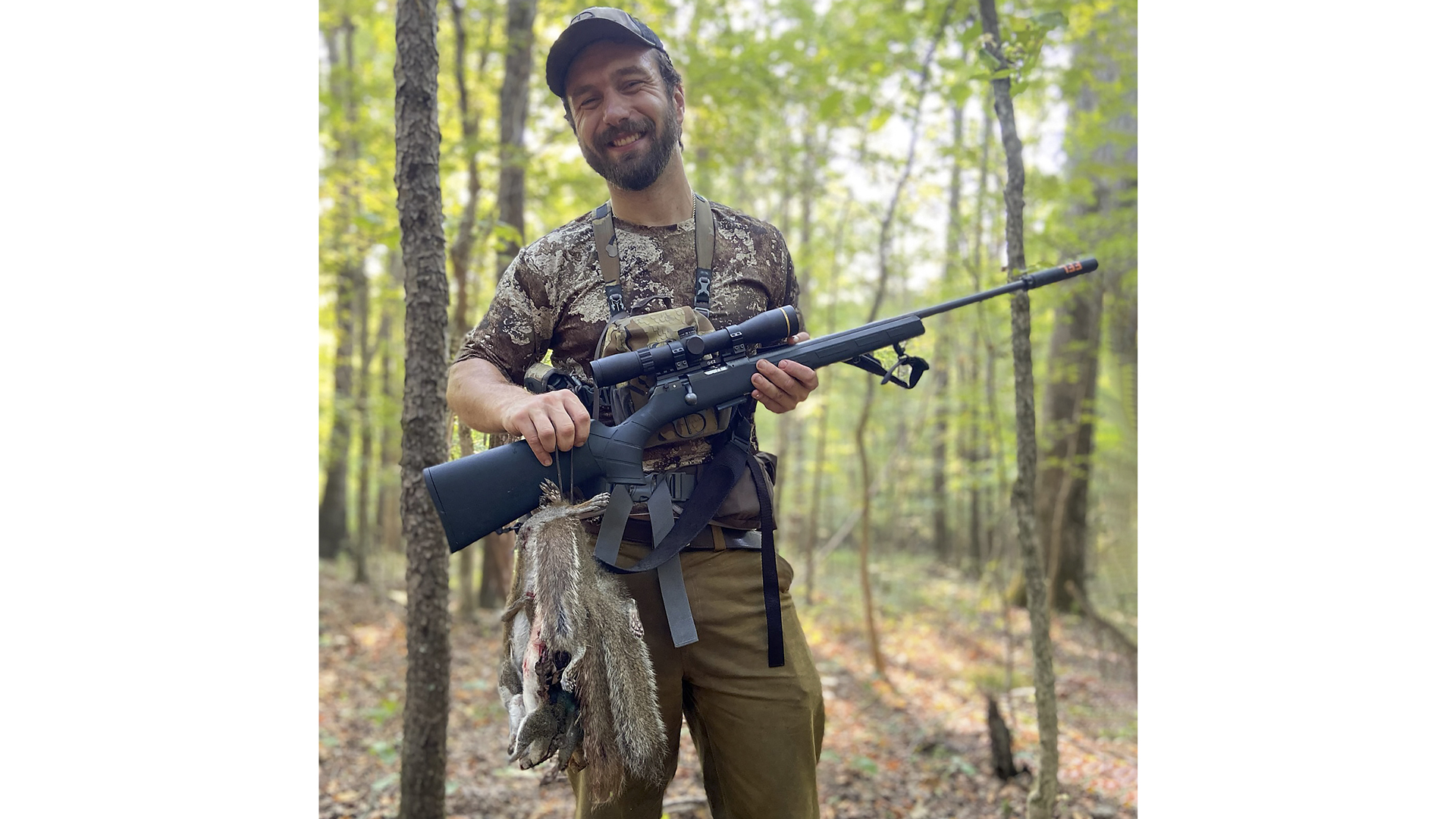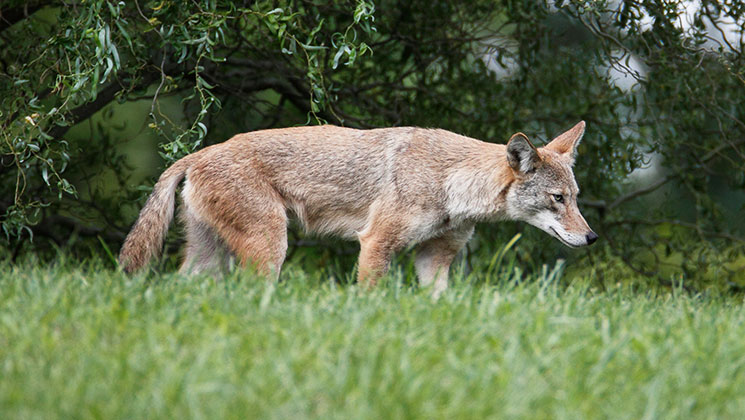
A lot of hunters say they target predators to help manage wildlife such as deer, turkeys and rabbits. Most begin hunting coyotes after deer season is over and proceed through the beginning of March. Even though winter is the most popular time to hunt predators, if you truly want to save fawns or poults, consider hunting coyotes during the late spring and throughout the summer months. This is when prey and predator alike are most vulnerable. Here are two main tactics for what I call the early predator season.
Mimic Young Prey
During the late spring and summer months most animals raise their offspring. Deer, turkey and rabbit populations are impacted the most by coyotes at this time of year due to the helplessness of these prey species’ young. Take advantage of this fact of nature when calling and using decoys to make your setups more realistic.
 For example, when hunting in the months of June, July or August, use a decoy such as the Lucky Duck Fawn Decoy. This, combined with fawn-in-distress sounds from an electronic caller, mimics what is actually happening in nature. Another highly effective set is a rabbit decoy placed in tall grass with the sounds of a baby cottontail in distress playing nearby. Young rabbits are common during the summer months of the year. Coyotes put the sound of what they are hearing with the visual aspect of the decoy, which takes away any hesitation when responding to the call.
The ease of realistically mimicking young prey in distress is not the only benefit of hunting during the summer. Coyotes themselves have young at this time, too. This is an important factor because they need more food than normal to feed their pups, which is why their response to prey-in-distress sounds can increase dramatically. Every distress sound is an opportunity at a free meal to feed their young.
Make Young Coyotes Curious
During the later part of the summer, young coyotes are old enough to start venturing out on their own to hunt for food. This, too, is a bonus for predator hunters.
Young coyotes are less experienced and eager to check out the sounds of other coyotes in the area. Adding a few subtle howls at the beginning of a calling sequence not only triggers the curiosity of young coyotes, but also sparks the protective and territorial instincts of the adults. One of my favorite calling tactics throughout the year is to howl before I use any other sounds. It works as well during the summer as any other time. I’ve had several coyotes come charging in howling, barking and sometimes even answering back with a challenge howl in the first few minutes of the set.
The coyote is one of the most territorial animals on the planet. If you don’t believe it, try using young prey-in-distress sounds and watch the race for who can feed its pups first. If you’re still not convinced, use vocals to make the local coyotes think others have moved their young into the area. This tactic makes them curious and they will come to the call faster, which results in more coyotes in the back of the truck at the end of the day. Taking advantage of young offspring in more ways than one will change the mind of the predator hunter who is leery about calling coyotes during the summer.