With two weeks left in the season, a buddy and I decided to double the size of our duck decoy spread. We were hunting a slough on a big river. Public pressure was sure to be high. We called two friends to help bolster decoy numbers.
Despite arriving on the river at 3 a.m., someone beat us to the prime spot. We set up 200 yards from them. Fifteen minutes before shooting light, a pair of hunters set up 75 yards from us. Bold. Not something I would have done.
By 9 a.m. we were picking up decoys. We had four limits of ducks—mostly mallards—to show for it. The other hunters were still there when we left. Our oversized spread paid off, something we couldn’t have done without the added manpower.
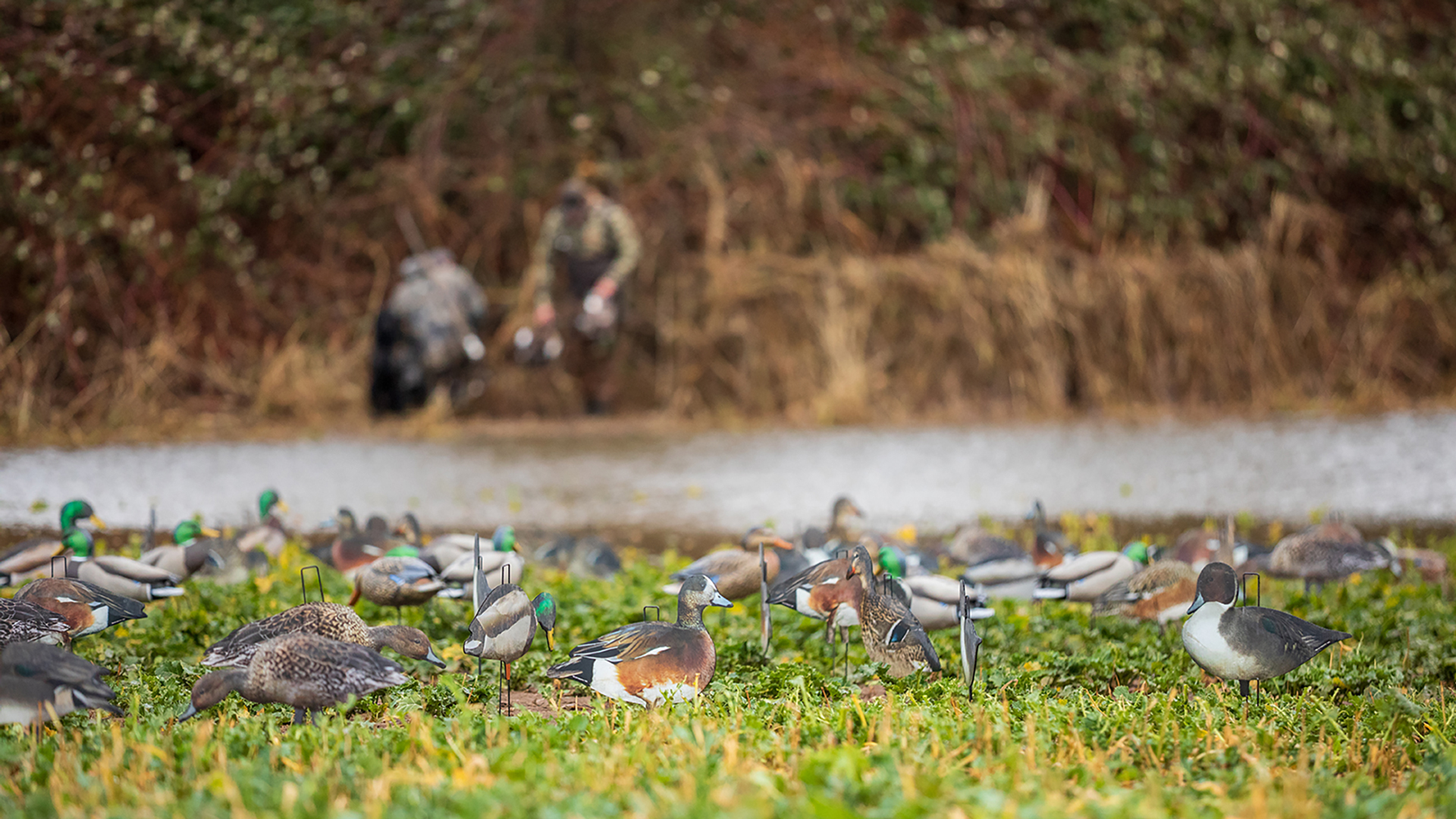
Increasing or decreasing the number of decoys in a spread is one way to kill more ducks in the final days of the season. Where public hunting competition is high, lots of decoys can be effective. When hunting small ponds, confined creeks and skinny sloughs, I often use only a half-dozen decoys late in the season. Sometimes three or four decoys, along with a swimmer on a jerk cord, is all it takes. The objective with the small spread is to deliver the message that ducks have just started arriving, and it’s safe to come feed or rest.
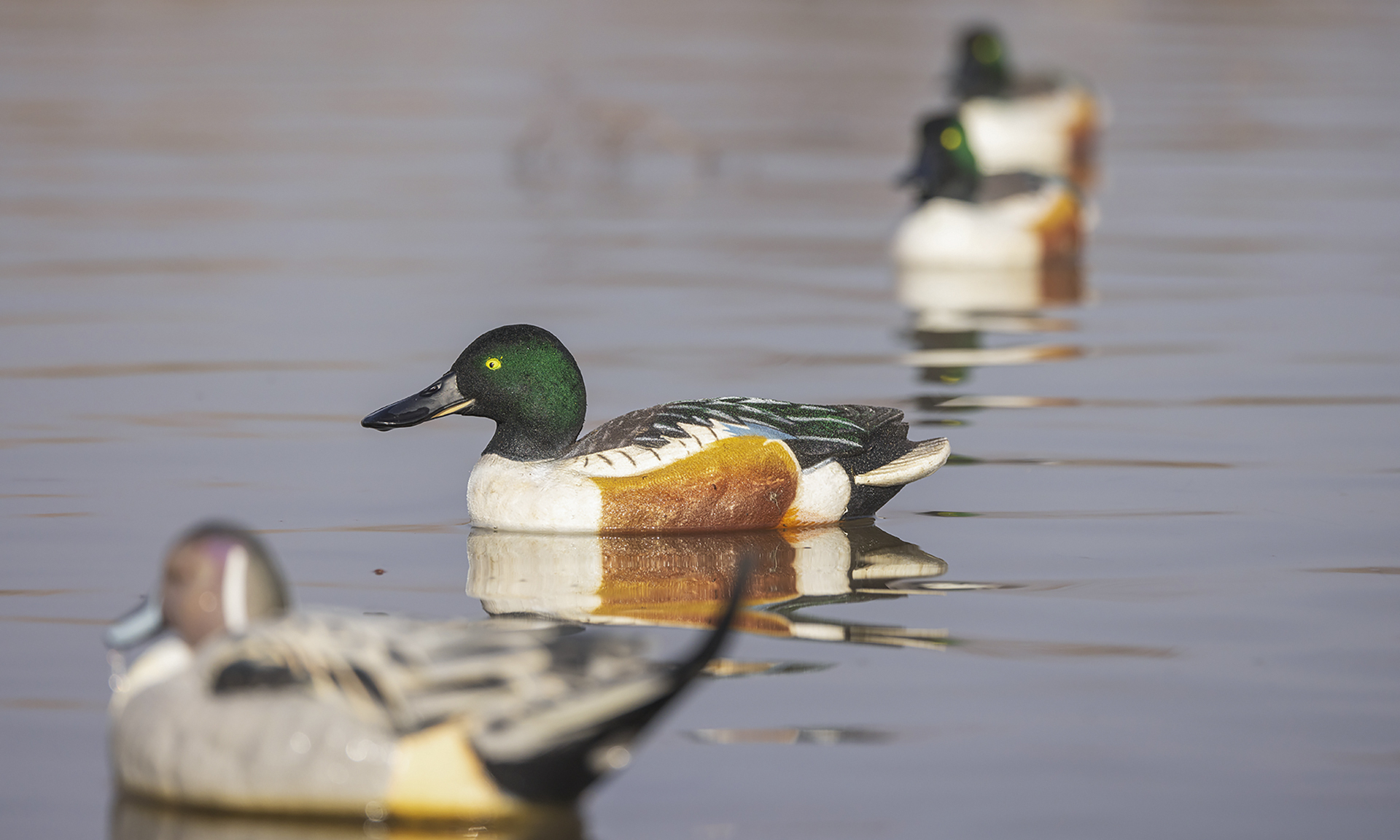
Increasing the visibility of a duck spread is another late-season move than can result in consistent shooting. In wide open spaces and in dark timber, add white to a spread. Where I hunt, drake pintail and shoveler decoys achieve this. Cleaning the muck off of dirty decoys also goes a long way. The whiter and cleaner the decoys, the more visible they’ll be. On sunny days the white pops from a distance, and in dark holes, it’s easy for ducks to see from afar.
A change in species can also spice up a decoy spread. This can be appealing to stagnant ducks as well as new arrivals from the north. Placing a half-dozen ring-necked duck decoys on the edge of a puddler spread has been a go-to move of mine for decades, and it still works. Mixing in a dozen coot decoys can also do the trick.
In the final days of last duck season, I added a dozen cinnamon teal decoys to a spread normally consisting of mallard, pintail and wigeon. There are few cinnamon teal in the area, but on that sunny morning they shined like new pennies. Dad and I shot limits of ducks that didn’t hesitate to dump into the spread. Whether the addition of cinnamons were to thank I can’t say for sure, but we were the only hunters in the swamp to shoot limits that morning.
The last weeks of the season are a good time to add new decoys to a spread. Early in the season, old, lackluster decoys suffice. But by season’s end, most ducks are well into courtship behaviors and their plumage shows it. Bright feathers, iridescent speculums and heads, and a clean look can be appealing to educated birds. I like using a mix of brands in multiple species. Some of these decoys are used only a few times a season.
Late last season I added Big Al’s new Eurasian wigeon silhouette decoys to a spread in a flooded rye grass field. Two dozen Final Approach wigeon floaters—along with six of their Eurasian floating decoys—were set to make it look like birds were landing in water and swimming toward shore. Spread out along the shoreline were five dozen Big Al’s American wigeon silhouettes. Where the floaters met the flat decoys, the six floating Euros met a few drake Euro silhouette decoys. Eurasian wigeon often flock with their own kind amid flocks of thousands of Americans. Not only did we shoot a Euro over the spread but also loads of American wigeon in the last hunts of the season.
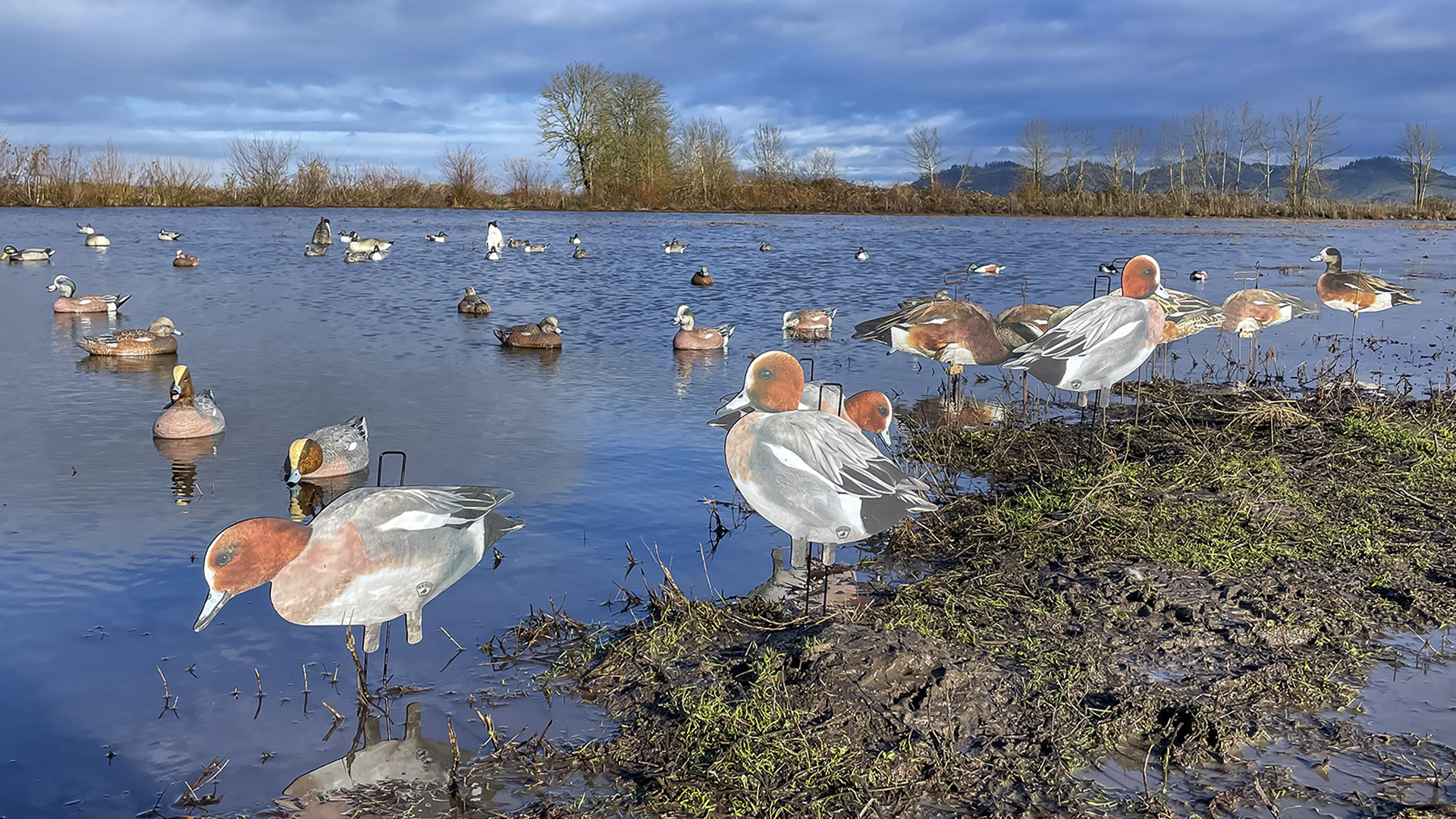
Silhouette decoys are a fast, easy way to increase the size of a decoy spread. When hunting flooded fields, we’ll often run only a dozen floating decoys with 15-20 dozen silhouettes packed tightly along the shoreline.
Two years ago, I fit a dozen Big Al’s mallards and a dozen wigeon decoys on to Higdon FLATS Motion Silhouette Stakes (higdonoutdoors.com). Sprinkled throughout a spread of stationary silhouettes, the added movement made a big difference in attracting ducks; it takes very little wind to get them moving. Motorized decoys are not allowed where much of my hunting takes place, so this setup, along with jerk cord swimmers and wing decoys, is how movement is achieved.
Motion Ducks is my go-to spreader (motionducks.com). For years I’ve had great success with their Ultimate Decoy Spreader System, and last year pulled in many ducks in the final weeks of the season with their new Shallow Water Spreader. The Shallow Water Spreader jerk cord works in only a few inches of water. We targeted wood ducks, teal and wigeon on multiple hunts late last season. The shallow-water rig allowed us to add movement where we previously could not. It routinely fooled smart ducks.
In flooded timber and river sloughs, staking mallard silhouettes to downed trees at water’s edge, as well as on floating logs, greatly increases the visibility of a decoy spread. Grab some 12-inch circle-top landscape pins, paint the tops flat black, insert them into a dozen mallard silhouette decoys and you’re set. Take a small hammer afield and it’s easy to stake them to logs. Step back 50 yards and look at how these elevated flat decoys add visibility to a spread and you’ll seek ways to include them on every hunt. Ducks love this look.
With the final days of duck season upon us, don’t be afraid to change the look of your decoy spreads. Be it a simple alteration or a bold move, a different presentation can be all it takes to provide a strong finish to the season.
* For signed copies of Scott & Tiffany Haugen’s popular book, Cooking Game Birds, visit scotthaugen.com. Follow his adventures on Instagram & Facebook.
Most Popular