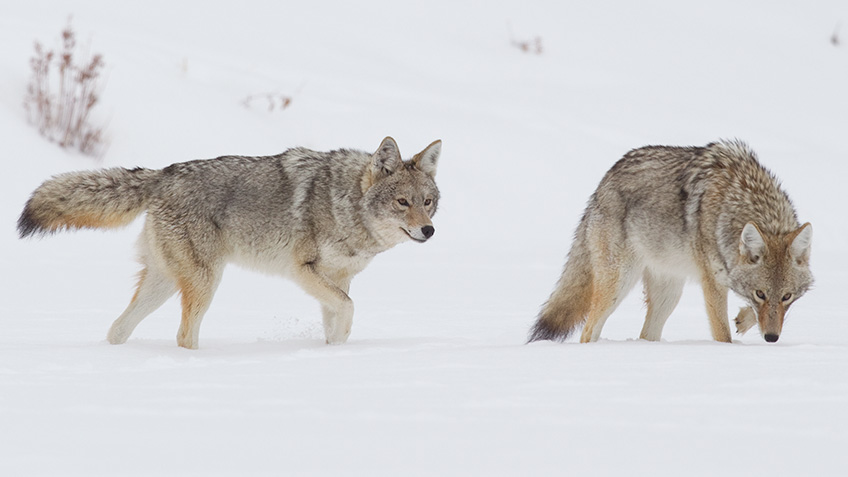
Don’t you hate it when more guests show up than are invited? When multiple coyotes show up to your calling invitation, the hatred disappears in the blur of fur and surge of adrenaline. Despite the fur bonanza in the making, you need to be prepared to take advantage of the multiple opportunities.
The most common situation to occur later in the season is the arrival of a pair. Coyotes are establishing territories for den duties and are in the midst of breeding. That means a male and female likely will be traveling together and responding to calls. In a hard winter it’s possible for a pack to still be working in concert, but whether you’re gawking at two or 20, fast thinking sets you up for multiple success.
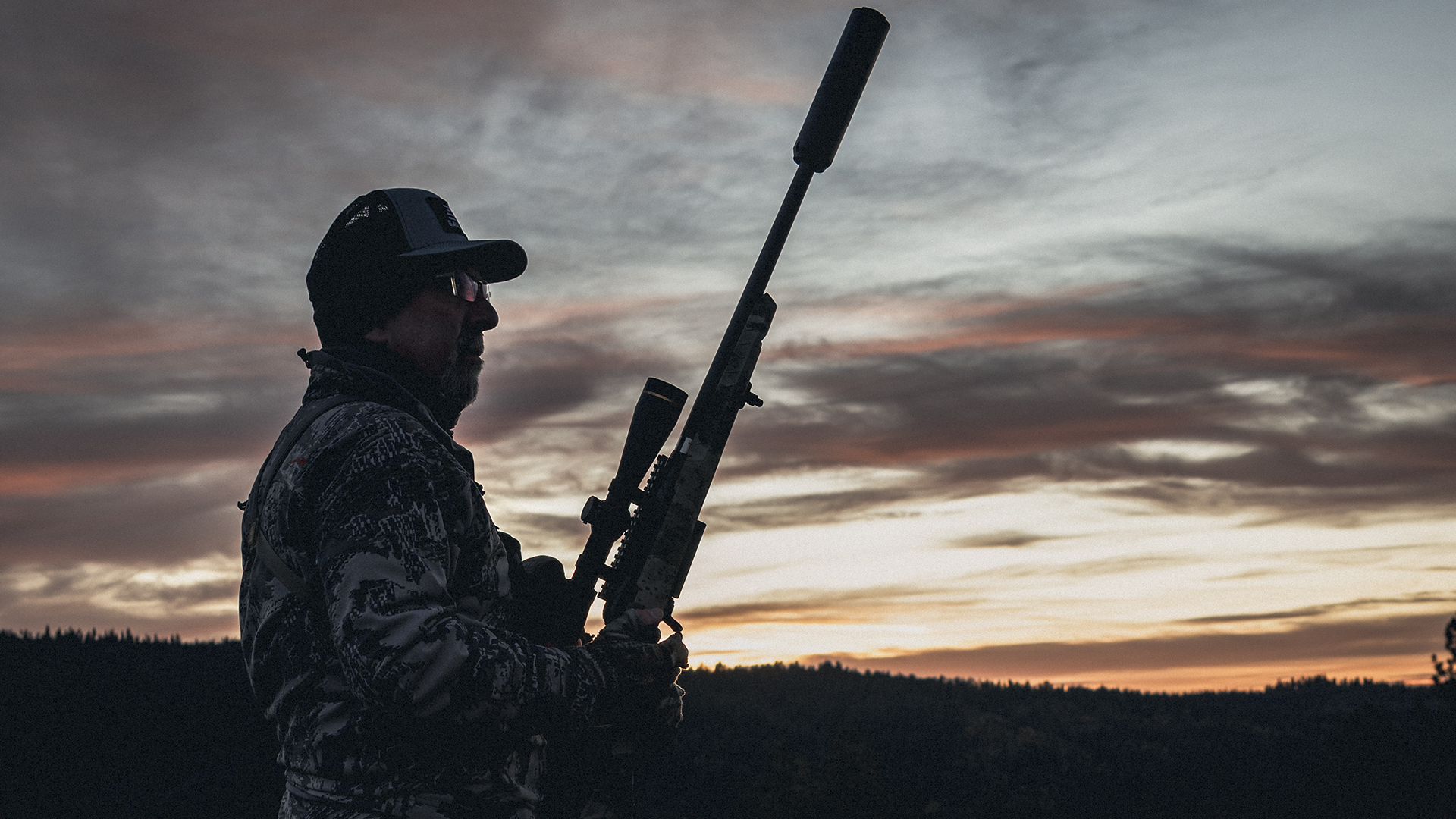
First, consider a suppressor for your rifle. Although it’s not uncommon for a coyote to ignore the thunder of a centerfire, loud noises typically denote danger. Late-season coyotes fear everything, including surprise “booms.” Legal to hunt with in 40 states, a suppressor deadens the snap of a rifle, but it isn’t as quiet as Hollywood conveys. Regardless, the sound isn’t as shocking and may possibly be missed by a coyote lagging behind a hill, especially if hunting on a windy day. Plus, suppressors reduce recoil, getting you back on target faster.
After attaching a suppressor, dial back your riflescope magnification before calling. Make sure you give yourself enough field of view to find the second coyote and enough field of view to follow through for a possible running shot. Always start on 4x or 6x, depending on your vantage point. If you need to shoot long, you should have time to range and dial up for a fur-filled view.
Next up, hunt with a partner. Back-to-back setups or those areas that require a team to split up to cover adjoining bases simply increase the odds for fewer coyotes to escape. The best scenario is to sit back to back for communication purposes. Make a plan ahead of time and have cues practiced to shoot at the same time. That, together with the previous suppressor suggestion, aids in stopping one coyote from getting a jumpstart after the first falls.
Whether hunting with a partner or solo, barking prods any coyotes into stopping. It helps to avoid a running shot and gives you a second to synchronize dual shots. You can also stop coyotes with a howl or the preferred wounded yip of a coyote simply by pushing a preset button on your caller. Now for the big debate: Do you shoot the lead or last coyote?
I’m old school and not Annie Oakley … obviously. I typically shoot the first, best shot on the closest coyote. Why? It guarantees a bit of bragging the next time I run into friends, and I like success. Second, oftentimes the country I hunt is characterized by rugged terrain with multiple escape routes. By the time I swing on the second coyote on a solo jaunt it has already disappeared in an eroded wash.
Gary Roberson, Mossy Oak pro staff member and owner of Burnham Brothers game calls, does a flip-flop when not filming for video. He shoots the hard coyote first, which is typically the straggler and, more often than not, it is the female. That leaves the lead male in retreat, but looking for its mate, making it that much easier to stop with a bark, yip or howl. To each his own.
Shooting one coyote late in the season should give you reason to boast. Shooting two or more on the same late setup could give you deity status among your inner circle of friends.