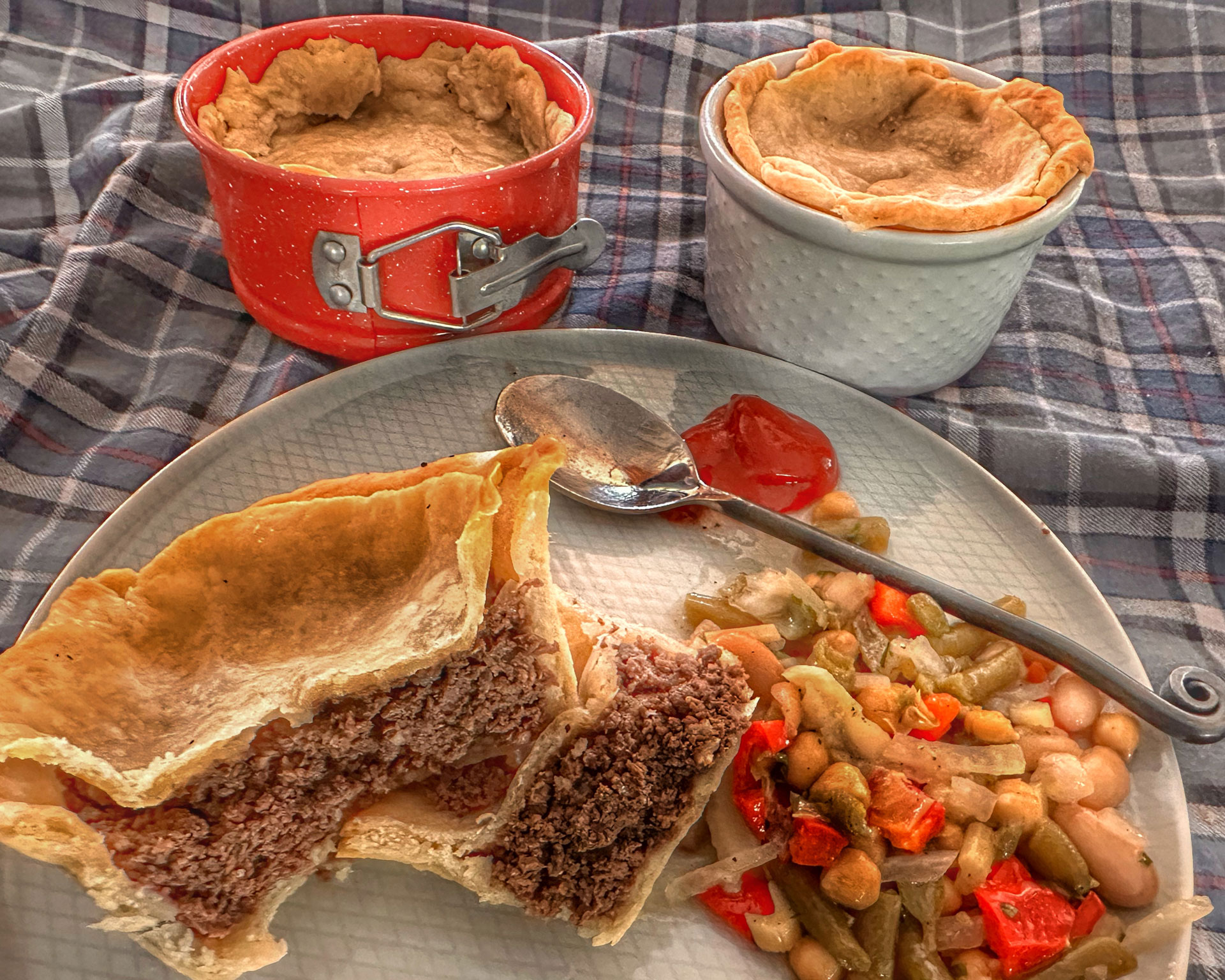
Scotch pies are a rich and satisfying meal or daytime snack. The pies can be eaten hot or cold, making an ideal meal for hunters in the field. This Scottish staple has been around for centuries and is traditionally made of lamb, mutton or beef. Hunters can make tasty pies from any venison. Pronghorn, wild sheep or aoudad are all great options for a more traditional taste.
The origins of the pie reflect available ingredients. It was basic, with meat and what herbs and spices would have been available. You can create your favorite pies by adding mushrooms, peas, celery, carrots and any spices you enjoy.
The hot water pastry makes a firm crust and should not be mistaken for flaky pastry. Consider the crust a firm container for the meat that adds crunch and flavor. The design of the crust, with a lid and tall sides, allows it to be eaten with hands and does not require cutlery. The pies are quick and easy to make, will last several days refrigerated or can be frozen.
Ingredients
Hot Water Pastry
- 4 cups plain flour
- 1 cup lard + 2 Tbsp.
- 1 cup very hot water
8 ramekins, jars, or springform pans 4 inches in diameter
Meat Pie Filling
- 2 lbs. ground venison
- 2 Tbsp. cooking oil
- 1 yellow onion
- 3 cloves garlic, pressed
- 1 Tbsp. marjoram
- 1 tsp. oregano, basil, or rosemary
- 1 tsp. ground nutmeg
- 1 tsp. salt
- ½ tsp. black pepper
- 1 cup beef stock
- Salt and pepper
Instructions for Pastry
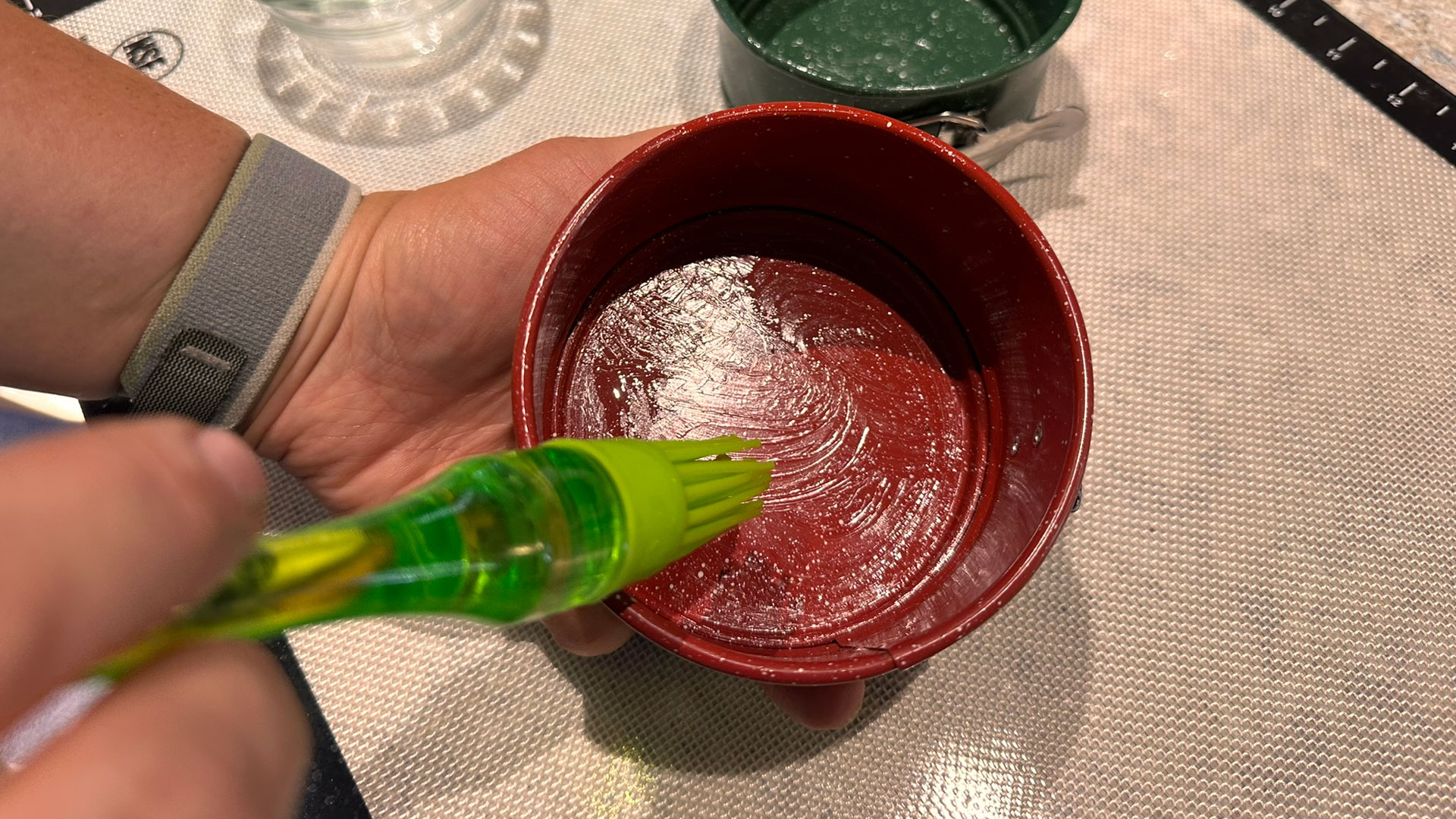
- Melt 2 tablespoons of lard and grease into 8 ramekins, jars or springform pans.
- Mix the remaining lard (cut into cubes) and hot water until the lard is melted and fully combined.
- Pour the flour into a large mixing bowl and make a well in the center.
- Slowly pour the lard mixture into the flour well and mix with a wooden spoon until loosely combined. Place the pastry onto a floured surface and knead until fully combined. The hot water pastry is easier to work with warm—if you let it cool, it is challenging.
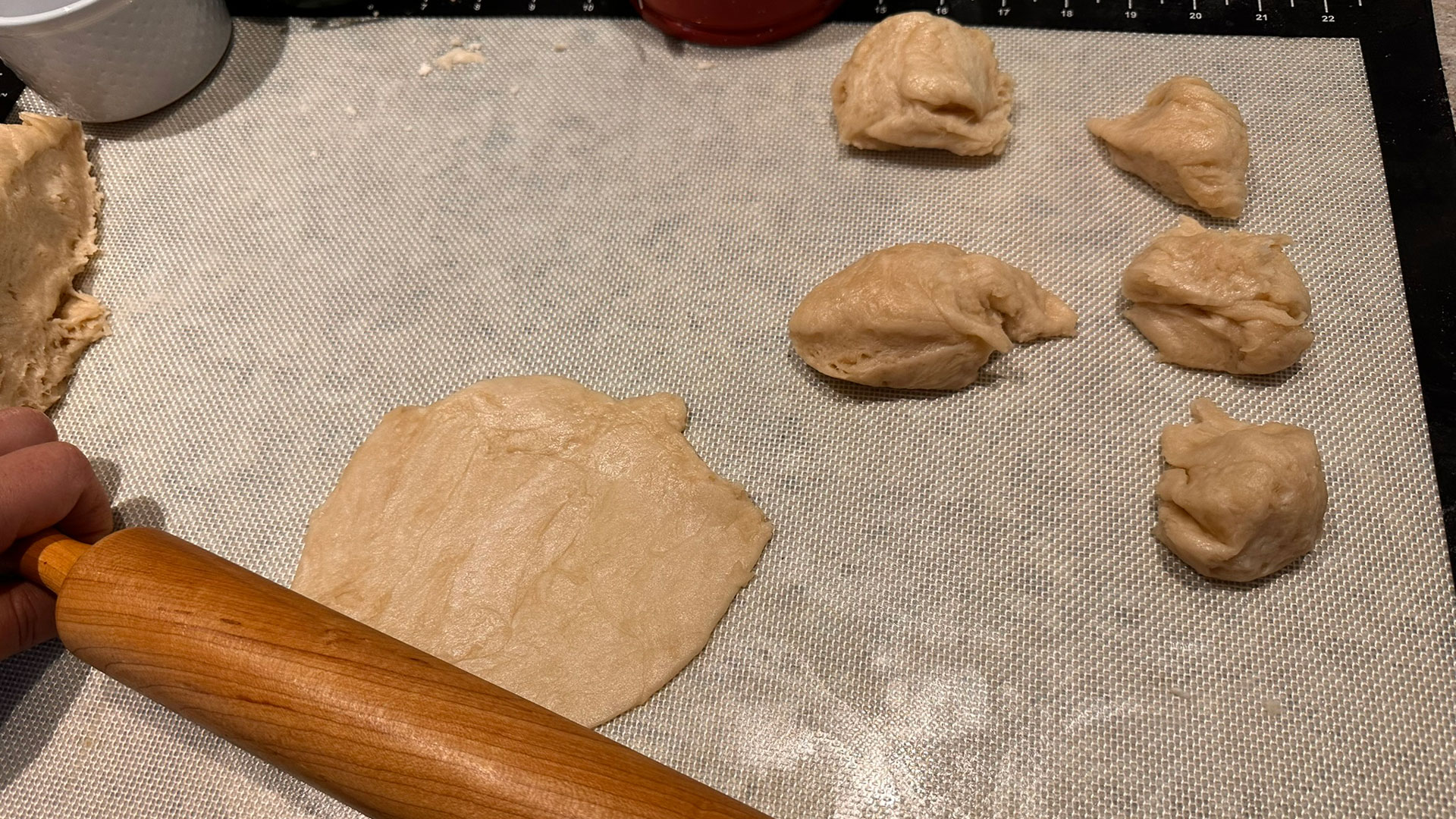
- Divide the pastry into eight balls. Take about ¼ of each ball to form the pie lid.
- Roll out each pastry ball to less than ¼ inch and place them in the oiled baking vessels. Make sure there is a flat, even edge to the rim. The pastry can shrink as it cools, so drape it over the rim and cut around it to create a flat edge.
- Roll each lid and place on plastic wrap or parchment paper. The lids must fit inside the pie vessel, so try to make them fit without overlap on the sides.
- Place the pastry vessels and lids in the fridge to cool and harden for about 15 minutes.
Instructions for Pie and Filling
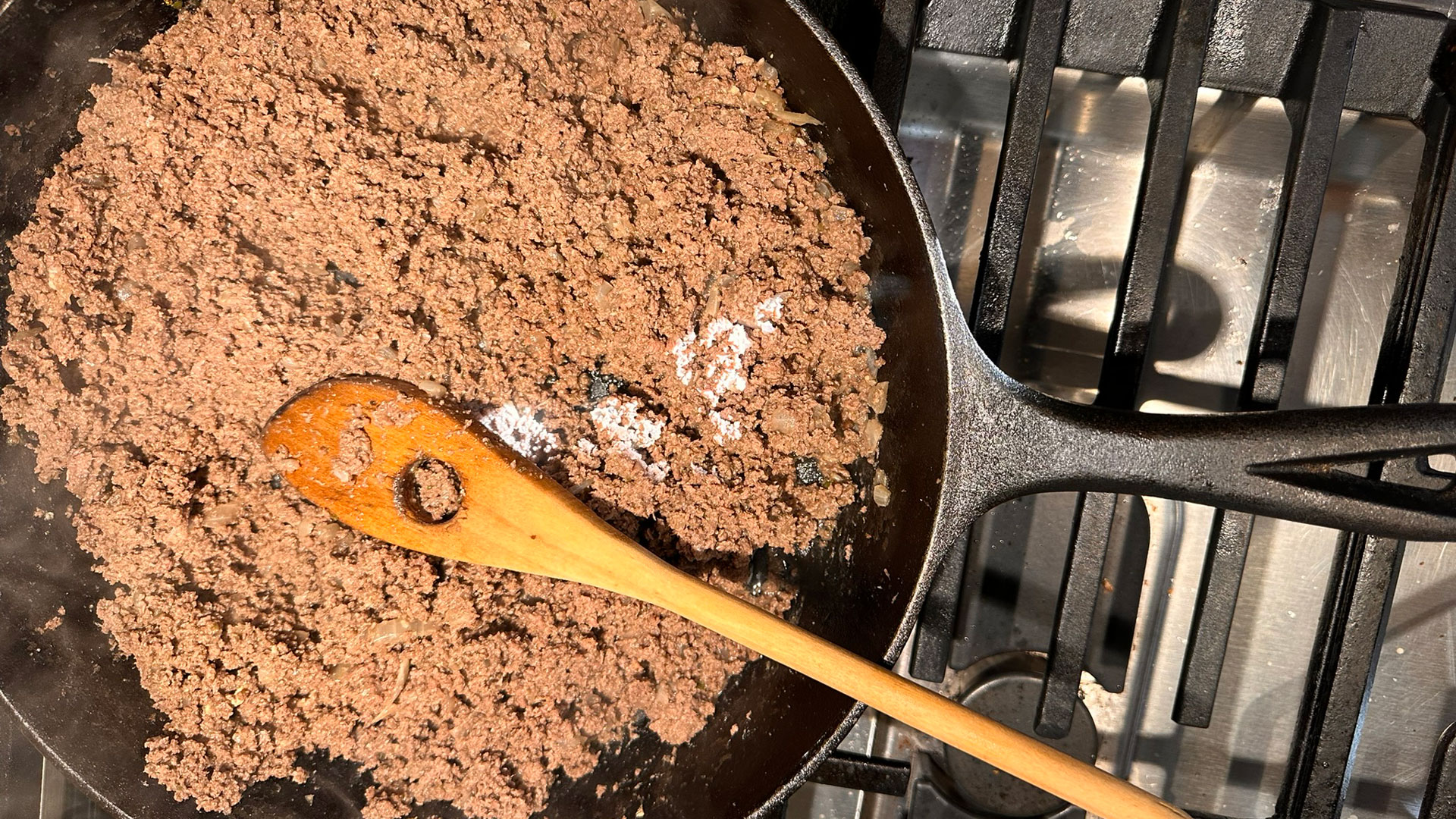
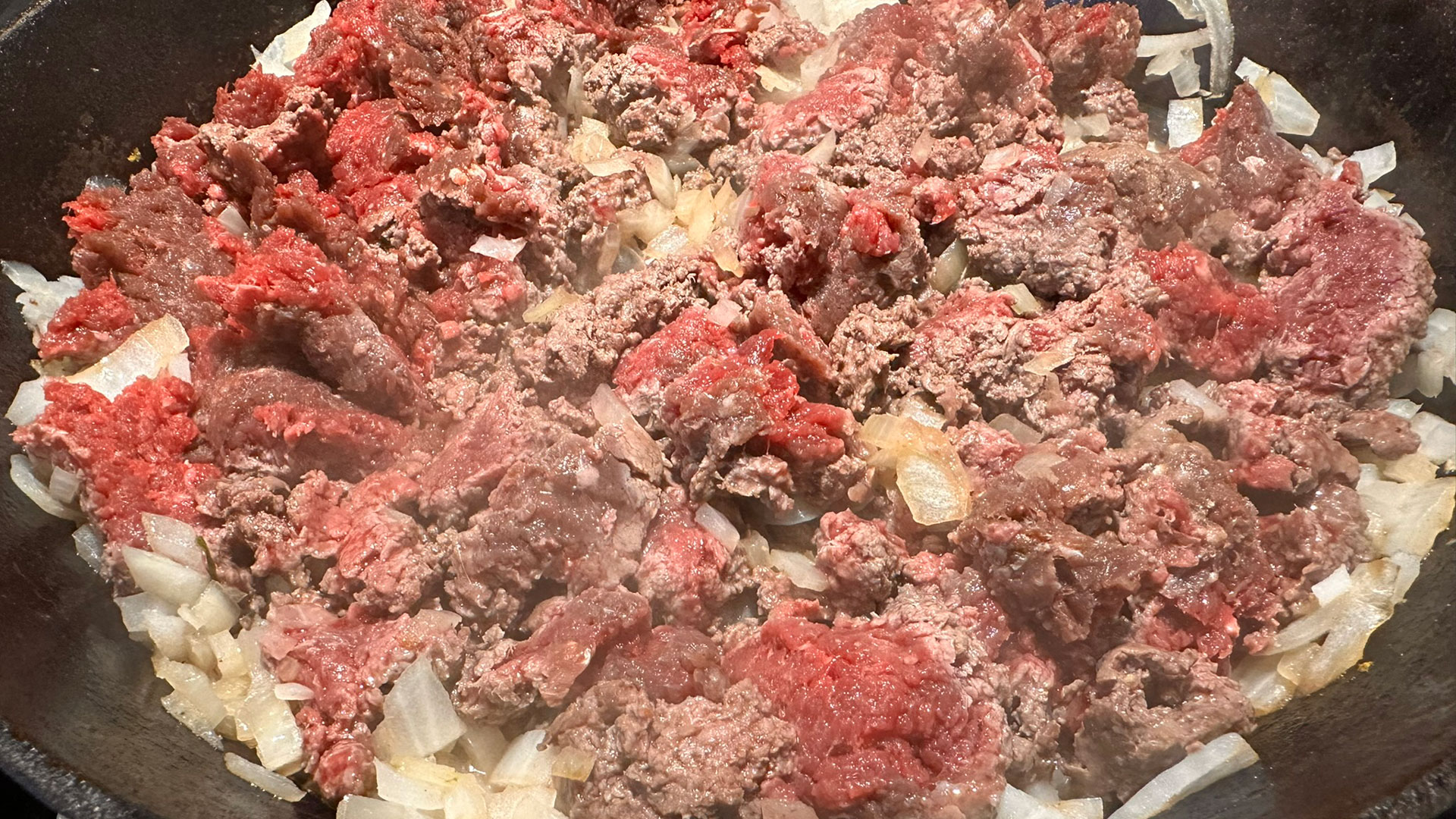
- Add some cooking oil and the onion in a large frying pan over medium-high heat. Sauté for five minutes, then add the ground venison. Add garlic, nutmeg, marjoram, basil, salt and pepper.
- Add the beef stock and reduce heat to a simmer when the meat has browned. Simmer for 10 minutes or until the liquid has reduced by half. Turn off the heat and allow to cool.
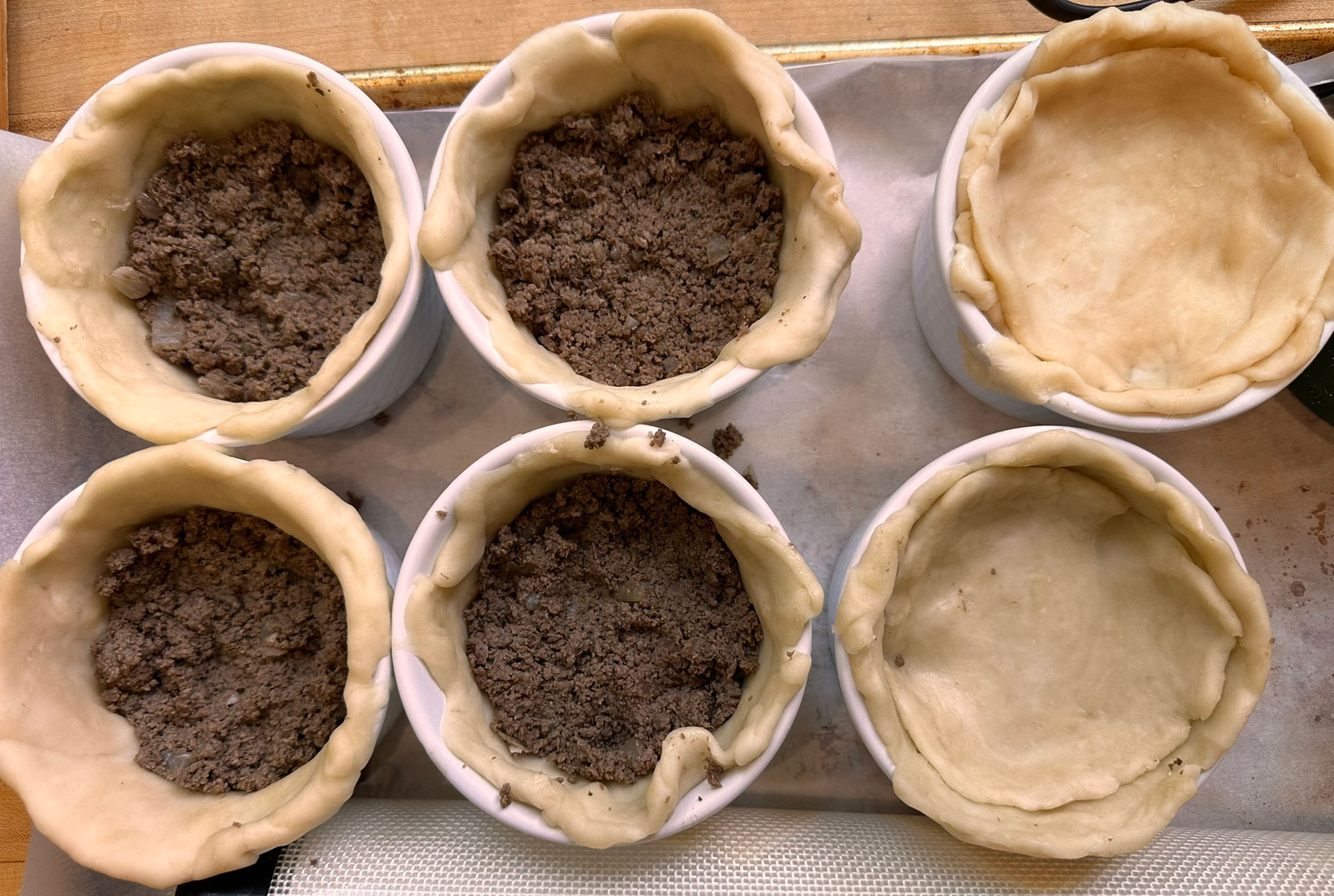
- Divide the venison mixture into the pie vessels so they are ¾ full.
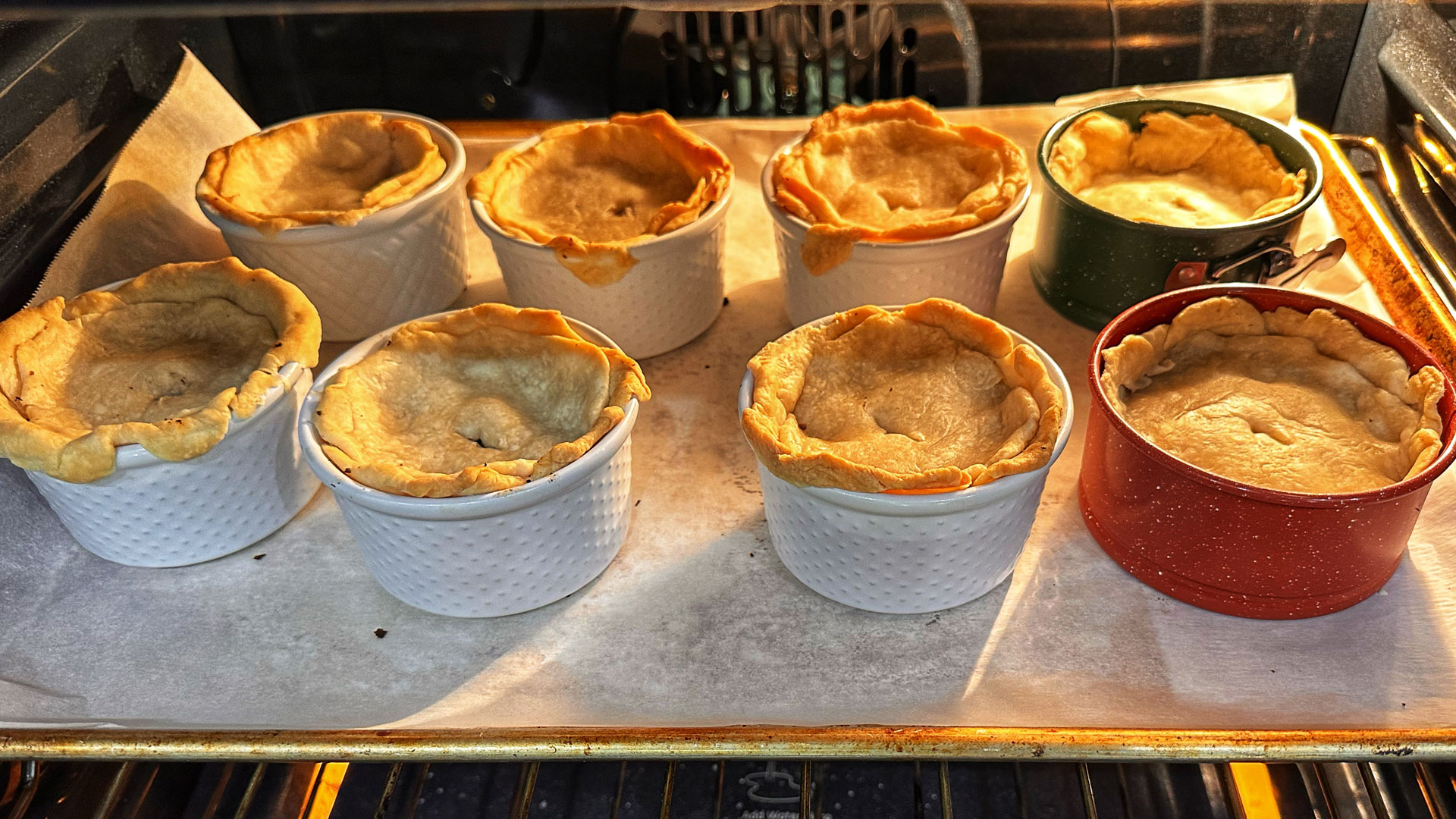
- Press the pie lids over the meat into the edges. The lid will be a minimum of 3/8 inches below the top of the vessel. Cut a hole in the lid to let moisture escape.
- Place the pies in an oven preheated to 350°F and bake for 45 minutes. The pastry will be golden-brown when done.
Tip: To help incorporate the beef stock into the lean venison, use a hand blender to pulse through the mixture, which creates more surface area to hold the moisture. Too much moisture will create a wet bottom crust and possibly leak from the pie.