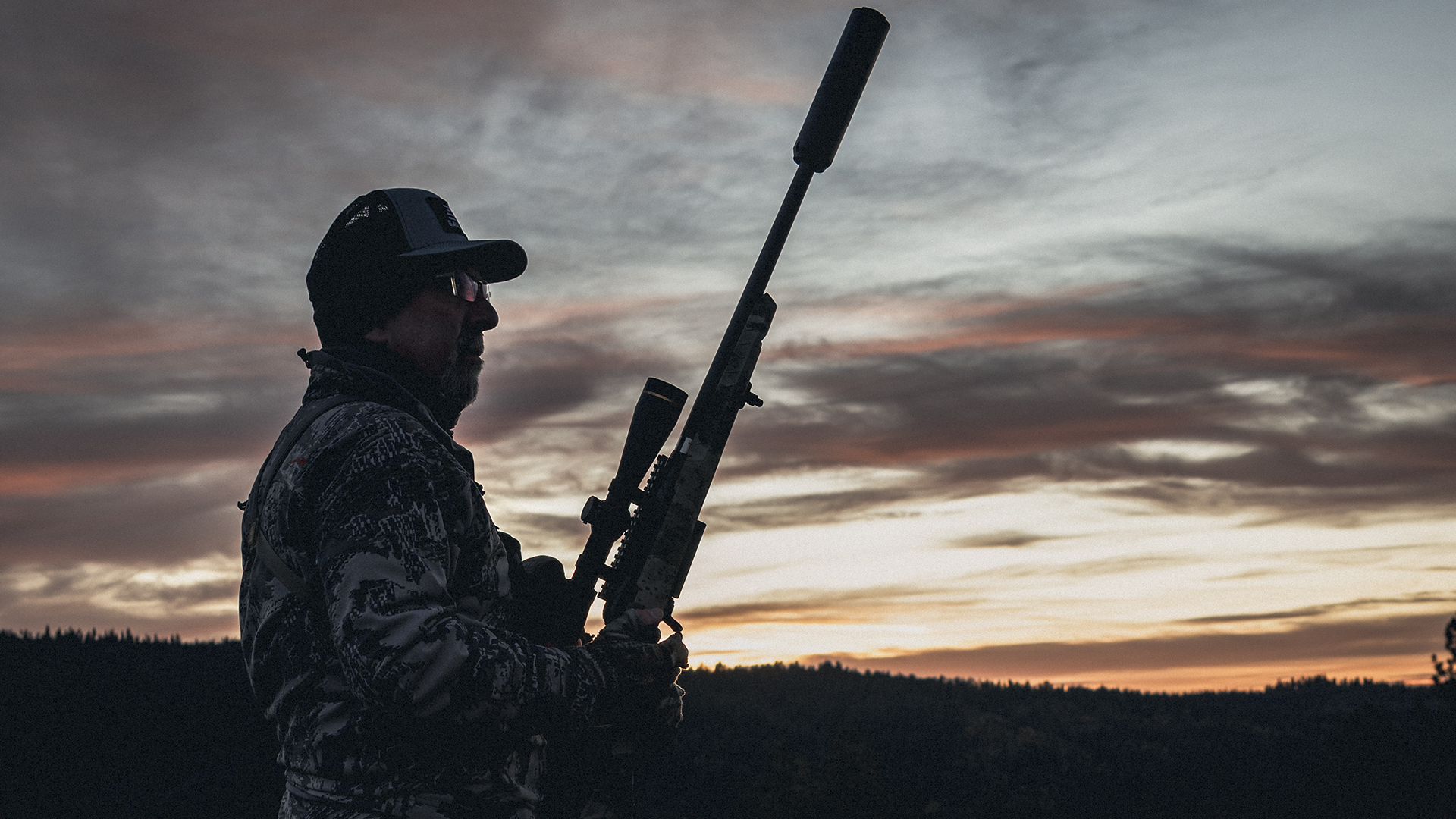
Q: I’m heading to Alaska for a sheep hunt later this year, and I’m told it will be some pretty mountainous country. I’m a flatlander from Mississippi not accustomed to shooting at game at steep angles, and local “experts” have given me four different answers about where to hold. Can you give me the straight answer?
A: Most of us do all our range shooting on the straight and level, with muzzle and target placed at the same elevation. But shooting at mountain-dwelling game such as sheep and goats may require shots to be taken at extreme angles, and these shots require some alteration of the aiming point.
Shooting uphill and downhill is flatter since the force of gravity is applied at less than the usual 90-degree angle to the flight path. On a given slope, the effect is substantially the same in firing uphill or down. To find the horizontal equivalent to a given slant range, the accompanying table can be used for elevations up to 45 degrees. For example, the horizontal range corresponding to a slant range of 300 yards on a 45-degree slope is 210 yards. The rifle should be aimed for 210 yards; if aimed for 300, the bullet may pass over the target.
At small angles, the effect is trifling. At steep angles, however, it can become a major consideration, compounding the difficulty of range estimation and angle determination in mountainous country.