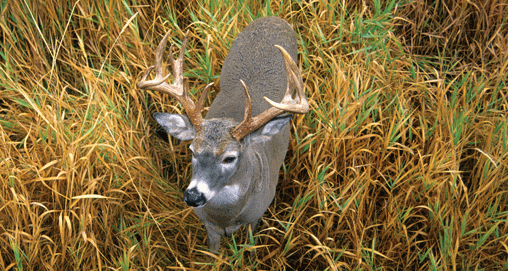
The main thing a whitetail needs to become a trophy is longevity. Yes, genetics and food sources play important roles, but a buck must survive at least 3½ years to grow decent antlers, and 4½ to become heavy. Many places that manage specifically for mature bucks won’t even shoot a buck until they’re certain it’s at least 5½ years old. Outside of managed areas, whitetails that live long enough to make the record books do so by spending much of their time in “sanctuaries” where hunters don’t tread. Learning to find their secret spots is a key to tagging these brutes.
Big-buck sanctuaries have oft been called “buck bedrooms” because the deer mostly bed and wait for darkness in these hiding spots. Such places can take many forms, such as parks, golf courses and posted lands. But though you can’t hunt many
sanctuaries, bucks invariably leave their safe havens from time to time, especially during the rut. They also get up at different times during the day to move around their hideouts. As a result, if you can find a big-buck sanctuary and hunt adjacent to it, your odds for bagging a trophy skyrocket. We’ve put together a list of 10 sanctuaries where aged whitetails often lay up. One of these areas just might harbor your dream buck.
1. Golf Courses and Parks
Whitetails love to munch on the lush grasses and manicured shrubs and plants that grow on golf courses; however, to be a sanctuary, a golf course so needs bedding cover. Whitetail fanatic Steve Pinkston found a golf course in central Ohio that appeared to have everything whitetails needed. Pinkston talked the course manager into letting him scout the grounds, and he found some long-tined sheds in a bedding thicket near a cluster of cabins.
Since he couldn’t hunt the golf course, Pinkston finagled permission to hunt a 12-acre strip of woods that separated the golf course from a soybean field. He set up trail cameras in the woods and soon had photos of three trophy bucks. One of them was enormous, but it only passed through at night....